What Is Filtration Technology? A Guide for Air Purifiers Buyers (2026)
Understand filtration technology explained by comparing published specs for HEPA, carbon, and ionizer filters across 6 air purifiers to improve your indoor air.
9 min read

Reviewed
What Is Filtration Technology? A Guide for Air Purifiers Buyers (2026)
Price today
| Amazon | Not listed | View deal |
|---|
We track one retailer, so this is not a price comparison. Affiliate link; price and stock come from the listing and change without notice.
What you need to know
- It captures 99.97% of particles down to 0.3 microns. Air Purifier Filtration Technology Explained
- This mechanical process traps dust, pollen, and pet dander effectively. Common Air Purifier Filtration Types
- True HEPA filters capture particles as small as 0.3 microns with high efficiency. Is Filtration Tech Worth It
- High-Efficiency Particulate Air filters capture 99.97% of particles 0.3 microns or larger. Key Filtration Terms
One line lifted from each section below — follow the link to read that section in full.
As Amazon Associates, we earn from qualifying purchases. This means we may receive a small commission at no extra cost to you if you click through and make a purchase.
As an Amazon Associate we earn from qualifying purchases. Links on this page are affiliate links.
Air Purifier Filtration Technology Explained
Understanding filtration technology explained helps you choose the right air purifier. These systems remove particles from indoor air. You should know how each type works. This guide breaks down the common methods found in listings.
HEPA filters trap tiny particles. True HEPA is a specific standard. It captures 99.97% of particles down to 0.3 microns. You will see this label on high-end models. It is essential for allergy sufferers.
Activated carbon filters handle odors and gases. They use porous material to absorb volatile organic compounds. This layer sits alongside HEPA in many units. If you cook or smoke indoors, this feature matters.
Ionizers release negative ions into the air. These ions attach to dust and pollen. The particles become heavy and fall to surfaces. You may need to clean floors more often. Some models combine ionizers with other filters.
UV-C light uses ultraviolet radiation. It targets bacteria and viruses. The light damages their DNA. This method works best when air flows slowly past the bulb. It is often an add-on feature.
Ozone generators produce ozone gas. This substance oxidizes contaminants. Health experts warn against high ozone levels. It can irritate lungs. Many regions restrict these devices. Check local laws before buying.
Washable filters are reusable. You can rinse them with water. They capture larger particles like pet dander. They do not replace HEPA filters. They extend the life of main filters. Maintenance is simple but regular.
Each technology serves a different purpose. You might need multiple layers. Look for combinations in product specs. True HEPA plus carbon is common. Avoid units that rely solely on ionization. Read the details carefully. Your health depends on effective filtration. Choose based on your specific air quality needs.
Common Air Purifier Filtration Types
HEPA Filter
HEPA filters capture airborne particles by forcing air through a fine mesh. This mechanical process traps dust, pollen, and pet dander effectively. You get reliable particle removal for everyday allergens. This technology suits buyers who want basic, proven filtration without complex features. The trade-off is that these units do not handle odors or gases well. You may need a separate carbon layer for smells. The Levoit Core 300 uses this standard HEPA approach. It focuses on quiet operation and solid particle capture for small spaces. You should check the filter replacement schedule, as clogged filters reduce airflow and efficiency over time.
True HEPA Filter
True HEPA filters meet strict industry standards for particle capture. They remove 99.97% of particles as small as 0.3 microns. This level of filtration handles fine dust, smoke, and bacteria. You get superior protection for allergy sufferers in larger rooms. The trade-off is higher energy use and cost for replacement filters. These units are heavier and often louder than basic models. The Winix 5510 combines True HEPA with activated carbon. It targets smoke and allergies in large spaces. You benefit from automatic mode adjustments. Ensure you buy genuine replacement filters to maintain the certified efficiency rating. Cheap substitutes often fail to meet the strict micron standards required for true HEPA performance.
Ionizer
Ionizers release negatively charged ions into the air. These ions attach to dust and pollen, making particles heavy. They fall to surfaces or stick to walls and furniture. This method removes particles without a physical filter. You avoid ongoing filter replacement costs. The trade-off is that you must clean surfaces frequently to remove the settled dust. Some ionizers produce small amounts of ozone. The Lab Charge Ionic model offers a compact solution for small rooms. It suits users who want zero maintenance and portability. You get quiet operation but no odor removal. This technology is best for spot cleaning rather than whole-room air quality management.
UV-C Light
UV-C light uses ultraviolet radiation to disrupt the DNA of microorganisms. This process neutralizes bacteria, viruses, and mold spores. It works best when air passes close to the light source. You get added protection against biological contaminants. The trade-off is limited effectiveness against non-living particles like dust. UV-C does not remove odors or allergens on its own. The GermGuardian AC48252PK combines UV-C with HEPA filtration. It targets smoke and pet dander while reducing microbes. You get a multi-stage approach for medium rooms. Ensure the bulb is replaced regularly, as UV output degrades over time. This technology is a supplement to mechanical filtration, not a standalone solution.
Activated Carbon Filter
Activated carbon filters use porous carbon to adsorb gases and odors. The large surface area traps volatile organic compounds and smoke smells. You get significant odor reduction for cooking or pet smells. This technology does not remove solid particles like dust. The trade-off is that carbon filters saturate over time and need replacement. They add weight and cost to the unit. Many units combine carbon with HEPA for comprehensive cleaning. You should look for units with thick carbon beds for better longevity. This filter type is essential for homes with strong odors. It works passively as air flows through the carbon layer. Check the carbon weight in specifications to gauge effectiveness.
Ozone Generator
Ozone generators produce high levels of ozone gas to oxidize pollutants. This chemical reaction breaks down odors, mold, and bacteria. It is a powerful tool for deep cleaning and deodorizing. The trade-off is significant health risks. Ozone irritates lungs and can worsen asthma. These units are not safe for occupied spaces. You must vacate the area during operation and ventilate thoroughly afterward. The OdorStop OS2500UV is designed for unoccupied large spaces. It suits users needing severe odor removal, like after fire damage. You should never use this as a primary daily air purifier. Follow safety guidelines strictly to avoid respiratory harm. This technology is a specialized treatment, not a routine cleaning method.
Is Filtration Tech Worth It
Who needs it
You need advanced filtration if you manage severe allergies or asthma. True HEPA filters capture particles as small as 0.3 microns with high efficiency. This matters for removing pet dander, pollen, and dust mites that trigger symptoms. If you live in an area with poor outdoor air quality, activated carbon filters help by adsorbing volatile organic compounds and odors. These chemicals come from cleaning products, paints, and furniture. Ionizers and UV-C lights offer additional layers of protection by neutralizing bacteria and viruses. You should prioritize these specs if your goal is comprehensive air cleaning. Buyers who want maximum particle removal will find this technology essential. It ensures that the air you breathe is free from common irritants and harmful microbes. This approach suits those who value health and cleanliness above all else.
Who can skip it
You can skip complex filtration if you only need basic dust control. Simple washable filters are easier to maintain and cost less to replace. They work well for removing larger particles like lint and coarse dust. If you have a small room with low pollution levels, a basic fan might suffice. You do not need ionizers or UV-C lights if you are not concerned about microbes. These features often add cost without significant benefit for healthy individuals. Prioritize airflow and noise levels instead. A quiet machine that runs continuously is more useful than a complex one you rarely use. You should also consider filter availability and replacement costs. Some advanced filters are hard to find or expensive. Focus on practical needs rather than marketing claims. Simple solutions often work best for everyday living.
Key Filtration Terms
HEPA Filter
High-Efficiency Particulate Air filters capture 99.97% of particles 0.3 microns or larger. This standard removes dust, pollen, and pet dander from your indoor air effectively.
True HEPA
This label confirms the filter meets strict efficiency standards. It ensures the device traps tiny allergens better than generic or HEPA-style alternatives found in some listings.
Activated Carbon
This material absorbs gases and odors from the air. It is essential for removing smoke smells, pet odors, and volatile organic compounds that standard filters miss.
CADR Rating
Clean Air Delivery Rate measures how fast a purifier removes smoke, dust, and pollen. A higher number indicates faster cleaning for your specific room size requirements.
Air Changes
This metric shows how many times the unit replaces the air in a room per hour. Higher air changes mean faster removal of airborne particles and allergens.
Pre-Filter
A washable screen that catches large particles like hair and lint. It protects the main filter from clogging quickly, extending the life of your more expensive components.
Micron Size
This unit measures particle diameter. Smaller micron sizes indicate finer particles. True HEPA filters target particles around 0.3 microns, which are the hardest to capture.
UV-C Light
Ultraviolet light used to kill bacteria and viruses. Some units combine this with filters to reduce microbial growth, though it is less common than mechanical filtration.
| # | Product | Best for | Price |
|---|---|---|---|
| 1 | Levoit Core 300 Air Purifier | bedrooms and small rooms needing quiet HEPA filtration | |
| 2 | Winix Extra Large True HEPA Air Purifier | Large rooms and allergy management | |
| 3 | Lab Charge Ionic Air Purifier | small rooms and zero maintenance needs | |
| 4 | GermGuardian 22-Inch HEPA Tower Air Purifier | medium rooms needing HEPA and UV-C filtration | |
| 5 | OdorStop OS2500UV Ozone Generator | Deodorizing large unoccupied spaces | |
| 6 | Levoit Vital Large Room Air Purifier | Large room allergy relief with verified CADR |
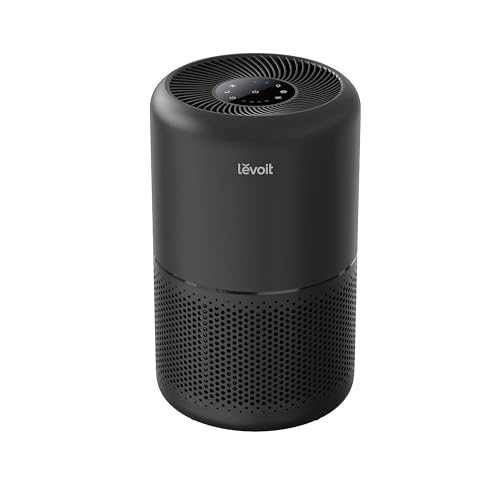
Levoit Core 300 Air Purifier
Best for: bedrooms and small rooms needing quiet HEPA filtration
- Filtration Technology
- HEPA Filter
- Coverage Area
- 1,073 ft²
- Filter Type
- HEPA-grade
- Filter Stages
- 3-in-1
- Minimum Particle Size
- 0.1 μm
- Target Pollutant
- Smoke, Odors, Pet Dander, Dust, Allergies, Pollen
The Levoit Core 300 is a compact air purifier designed for bedrooms and small rooms. It uses a 3-in-1 HEPA filter system to capture 99.97% of particles as small as 0.1 to 0.3 microns. The unit features a 56W motor delivering 143 CFM for smoke, 153 CFM for dust, and 167 CFM for pollen. It operates at 24dB in Sleep Mode. You will appreciate its AHAM VERIFIDE certification for reliable performance in spaces up to 1,073 square feet.
- AHAM VERIFIDE certified with specific CADR ratings
- Captures 99.97% of 0.1 to 0.3-micron particles
- Operates at a quiet 24dB in Sleep Mode
- 56W motor provides 143 CFM smoke CADR
- Heavier build at 7.9 pounds compared to lighter competitors
- Lower smoke CADR of 143 CFM versus higher-rated models
- Single pack size limits immediate whole-home coverage
- You need a certified HEPA purifier for a bedroom
- You prioritize quiet operation during sleep hours
- You want AHAM VERIFIDE performance assurance
- You require smart app connectivity for remote control
- You need to purify a room larger than 1,073 square feet
- You prefer a tower-style design for vertical spaces
Verdict: Levoit Core 300 HEPA Air Purifier suits buyers seeking a certified, quiet unit for small rooms. It delivers reliable particle filtration without smart features. This model fits well in bedrooms where noise matters more than app control.

Winix Extra Large True HEPA Air Purifier
Best for: Large rooms and allergy management
- Filtration Technology
- HEPA Filter, True HEPA Filter, Activated Carbon Filter
- Filter Type
- True HEPA
- Minimum Particle Size
- 0.01 microns
- Room Size
- Large Rooms
- Target Pollutant
- Smoke, Allergies
- Features
- Auto Mode
The Winix 5510 targets large rooms up to 1,881 square feet with a True HEPA filter capturing 99.99% of particles as small as 0.01 microns. It pairs this with an activated carbon filter for odor control and a washable pre-filter. Smart sensors adjust fan speed automatically, and the unit operates quietly at 23.5 dB on its lowest setting. It includes app support for remote control.
- True HEPA filter captures 99.99% of allergens down to 0.01 microns
- Cleans large rooms up to 1,881 square feet in one hour
- Activated carbon filter reduces VOCs and household odors
- Smart sensor adjusts fan speed automatically in real-time
- Operates at 23.5 dB on the slowest speed
- Heavier at 13.3 pounds compared to lighter competitors
- Bulky dimensions of 15.9 x 11 x 25.2 inches require more floor space
- App support is the only connectivity option listed
- You need to clean large rooms up to 1,881 square feet
- You want automatic fan speed adjustment based on air quality
- You prefer a washable pre-filter to extend HEPA life
- You require a compact unit for small bedrooms
- You need multiple connectivity options like Wi-Fi or Bluetooth
- You prioritize a lighter device under 10 pounds
Verdict: Winix 5510 True HEPA Air Purifier suits buyers who need robust coverage for large spaces and value automatic air quality monitoring. It is a solid choice for allergy sufferers who want app control and quiet operation.

Lab Charge Ionic Air Purifier
Best for: small rooms and zero maintenance needs
- Filtration Technology
- HEPA Filter, Ionizer
- Coverage Area
- 250 Sq Ft
- Target Pollutant
- Smoke, Odors, Pet Dander, Dust
- Color
- Black
- Placement
- Home, Bedroom
- Dimensions
- 1.5 × 2 × 3.5 inches
The Lab Charge Ionic1611K combines HEPA filtration with ionizer technology to handle smoke, odors, pet dander, and dust. It covers 250 square feet, making it suitable for bedrooms or small offices. Its compact dimensions of 2 by 1.5 by 3.5 inches and weight of 4.8 ounces allow for easy placement on desks or shelves. You get a zero-maintenance unit that requires no filter replacements, ideal for renters or students seeking simple air quality improvements.
- Combines HEPA filter and ionizer technology
- Covers up to 250 square feet
- Compact size of 2 x 1.5 x 3.5 inches
- Lightweight at 4.8 ounces
- Zero filter replacement maintenance
- 250 square foot coverage is smaller than competitors
- 4.8 ounce weight may feel less substantial
- Limited to small rooms like bedrooms or offices
- You need a portable option for a single room
- You want to avoid filter replacement costs
- You have limited desk or shelf space
- You need to purify a large living area
- You require smart app connectivity
- You want a unit with a larger coverage area
Verdict: Lab Charge Ionic Air Purifier 250 Sq Ft is a compact, low-maintenance solution for small spaces like bedrooms or offices. It fits buyers who prioritize portability and zero filter costs over large room coverage.
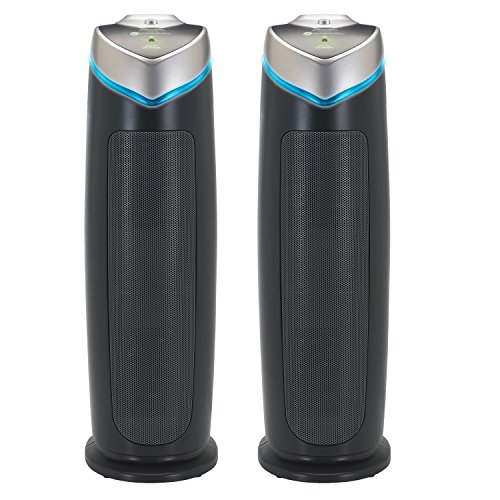
GermGuardian 22-Inch HEPA Tower Air Purifier
Best for: medium rooms needing HEPA and UV-C filtration
- Filtration Technology
- HEPA Filter, UV-C Light
- Coverage Area
- 743 sq. ft.
- Filter Type
- HEPA PURE
- Minimum Particle Size
- 0.1 microns
- Room Size
- Large Rooms
- Target Pollutant
- Smoke, Pet Dander, Dust, Pollen
This tower unit combines HEPA filtration with UV-C light for rooms up to 743 square feet. It captures 99.97% of allergens as small as 0.1 microns. The activated carbon layer reduces cooking and pet odors. You get three fan speeds and a quiet sleep mode. It is CARB Certified and Zero Ozone Verified. This model suits allergy sufferers who need a compact vertical design for bedrooms or offices.
- HEPA filter captures 99.97% of particles 0.1 microns or larger
- UV-C light reduces airborne particles
- Activated carbon filter reduces odors from cooking and pets
- Circulates air in large spaces up to 743 sq. ft. every hour
- Smaller coverage area of 153 sq. ft. for 12.5-minute cycles compared to competitors
- Heavier build at 21.4 pounds
- Fewer smart features than app-enabled models
- You need a vertical tower to save floor space in a bedroom
- You want HEPA filtration combined with UV-C light for allergen control
- You prefer a unit with odor-reducing activated carbon
- You require smart home app integration or remote control
- You need to purify a very large room over 743 sq. ft.
- You prefer a lightweight unit under 20 pounds
Verdict: GermGuardian AC48252PK Tower Air Purifier fits allergy sufferers who need a compact, odor-reducing tower for medium-sized rooms. It offers solid HEPA and UV-C specs without the bulk of larger units.

OdorStop OS2500UV Ozone Generator
Best for: Deodorizing large unoccupied spaces
- Filtration Technology
- Ionizer, Ozone Generator
- Coverage Area
- 2500 Square Feet+
- Color
- Blue
- Dimensions
- 12.5 × 9 × 7.5 inches
- Weight
- 9.75 pounds
This unit targets spaces up to 2500 square feet using ozone generation and ionization rather than standard filtration. It features a variable output ranging from 100 to 1200 mg/h and includes UV-C light for added purification. The device weighs 9.75 pounds and measures 12.5 by 9 by 7.5 inches. You should use this in unoccupied areas to eliminate stubborn odors from smoke, pets, or cooking.
- Variable ozone output from 100 to 1200 mg/h
- Covers areas up to 2500 square feet
- Includes UV-C light for additional purification
- Washable filter reduces maintenance needs
- 12-hour timer with hold option
- Smaller coverage area than the Vital 200 which handles 1875 square feet
- Heavier build at 9.75 pounds compared to lighter portable units
- Limited to ozone and ionization technology without HEPA filtration
- You need to deodorize large, unoccupied spaces like basements or hotel suites
- You want a unit with a variable output setting to adjust intensity
- You require UV-C light to supplement the ozone treatment
- You need to run the device while people or pets are present
- You require a HEPA filter to capture airborne particles
- You want a quiet unit for constant operation in a bedroom
Verdict: OdorStop 2500 sq ft Ozone Generator is a specialized tool for deep deodorizing large rooms. It fits buyers who need strong odor removal in empty spaces and can safely manage ozone exposure.

Levoit Vital Large Room Air Purifier
Best for: Large room allergy relief with verified CADR
- Filtration Technology
- HEPA Filter
- Coverage Area
- 1875 sq ft
- Filter Type
- HEPA
- Room Size
- Large Rooms
- Target Pollutant
- Pet Dander, Allergies
- Features
- Air Quality Monitor, Sleep Mode
This Levoit Vital 200S-P air purifier uses a HEPA filter to target pet dander and allergies in large rooms up to 1875 sq ft. It carries the AHAM VERIFIDE seal, meaning its performance is independently tested. You get specific CADR ratings of 250 CFM for smoke, 254 CFM for dust, and 289 CFM for pollen. The unit includes an air quality monitor and sleep mode for bedroom use.
- AHAM VERIFIDE certified for independent performance testing
- High CADR ratings: 289 CFM pollen, 254 CFM dust, 250 CFM smoke
- Covers large rooms up to 1875 sq ft
- Includes air quality monitor and sleep mode
- Heavier at 13.2 pounds compared to lighter competitors
- Single filtration type (HEPA) without activated carbon for odors
- No smart app support mentioned in specifications
- You need verified CADR ratings for large spaces
- You want to reduce pet dander and pollen
- You prefer independent safety and efficiency certification
- You require smart app control or remote access
- You need to eliminate pet odors or VOCs
- You prefer a lighter, more portable unit
Verdict: Levoit Vital 200S Large Room HEPA suits allergy sufferers who prioritize verified particle removal over smart features or odor control. It fits large rooms where dust and pollen are the primary concerns.
Specifications side by side
| Spec | Levoit Core 300 Air Purifier | Winix Extra Large True HEPA Air Purifier | Lab Charge Ionic Air Purifier | GermGuardian 22-Inch HEPA Tower Air Purifier | OdorStop OS2500UV Ozone Generator | Levoit Vital Large Room Air Purifier |
|---|---|---|---|---|---|---|
| Coverage Area | 1,073 ft² | – | 250 Sq Ft | 743 sq. ft. | 2500 Square Feet+ | 1875 sq ft |
| Filter Type | HEPA-grade | True HEPA | – | HEPA PURE | – | HEPA |
| Filter Stages | 3-in-1 | – | – | – | – | – |
| Minimum Particle Size | 0.1 μm | 0.01 microns | – | 0.1 microns | – | – |
| Room Size | – | Large Rooms | – | Large Rooms | – | Large Rooms |
| Filtration Technology | HEPA Filter | HEPA Filter, True HEPA Filter, Activated Carbon Filter | HEPA Filter, Ionizer | HEPA Filter, UV-C Light | Ionizer, Ozone Generator | HEPA Filter |
| Target Pollutant | Smoke, Odors, Pet Dander, Dust, Allergies, Pollen | Smoke, Allergies | Smoke, Odors, Pet Dander, Dust | Smoke, Pet Dander, Dust, Pollen | – | Pet Dander, Allergies |
| Features | Sleep Mode | Auto Mode | – | – | – | Air Quality Monitor, Sleep Mode |
| Form Factor | – | – | – | Tower | – | – |
| Color | Black | Polished Charcoal Gray | Black | White | Blue | White |
| Placement | Home, Bedroom | Home | Home, Bedroom | Home, Bedroom, Office | – | Home, Bedroom |
| Connectivity | – | App | – | – | – | – |
| Dimensions | 8.7 × 8.7 × 16.3 inches | 11 × 15.9 × 25.2 inches | 1.5 × 2 × 3.5 inches | 6.75 × 10.3 × 21.5 inches | 12.5 × 9 × 7.5 inches | 15 × 8.66 × 19.7 inches |
| Weight | 7.9 pounds | 13.3 pounds | 4.8 ounces | 21.4 pounds | 9.75 pounds | 13.2 pounds |
| Size | Core 300 1Pack | Extra Large | Cover 250 Sq Ft | 22" | 2500 sq ft + UV | 15.6"D x 8.5"W x 19.8"H |
| Model | Core 300 | 5510 | Ionic1611K | AC48252PK | OS2500UV | LAP-V201S-WUS |
Frequently asked questions
What is the difference between HEPA and True HEPA filters?
True HEPA filters meet strict efficiency standards for capturing particles as small as 0.3 microns. Standard HEPA filters may have slightly lower capture rates for these tiny particles. You get reliable particle removal with either type, but True HEPA offers certified performance for severe allergies. The Levoit Core 300 uses a standard HEPA filter for quiet bedroom use. The Winix 5510 provides True HEPA filtration for larger spaces and better allergen management.
Do ionizers produce ozone that is harmful to breathe?
Some ionizers generate ozone as a byproduct of charging particles. The OdorStop OS2500UV is an ozone generator designed for deodorizing large, unoccupied spaces. You must ensure the room is empty when using such devices to avoid breathing ozone. The Lab Charge Ionic Air Purifier uses ionization technology for small rooms. It offers low maintenance but does not specify ozone output levels in its data.
How does activated carbon help with air quality?
Activated carbon filters adsorb gases, odors, and volatile organic compounds. They work alongside mechanical filters to improve air scent and chemical removal. The Winix 5510 combines True HEPA with an activated carbon filter for comprehensive cleaning. This setup suits buyers who need to manage smoke and general odors in large rooms. It provides a broader range of pollutant removal than HEPA alone.
Is UV-C light effective for killing bacteria in air purifiers?
UV-C light disrupts the DNA of microorganisms like bacteria and viruses. It is often paired with HEPA filters for enhanced sanitation. The GermGuardian AC48252PK Tower includes UV-C light alongside HEPA filtration. This combination targets smoke, pet dander, and dust in medium rooms. It offers a compact solution for buyers wanting added biological protection without significant bulk.
Can I wash and reuse the filters in these units?
Most listed units use disposable HEPA filters that cannot be washed. The Lab Charge model is noted for zero maintenance needs, implying a washable or permanent design. However, most HEPA filters lose efficiency if cleaned with water. You should check the specific filter type for each device. The Levoit Vital 200S and Winix 5510 use standard HEPA filters that require replacement rather than washing.
What size room does a 250 sq ft purifier cover?
A unit rated for 250 square feet is designed for small spaces. The Lab Charge Ionic Air Purifier covers 250 sq ft and fits bedrooms or offices. Its compact size measures 2 inches wide and 3.5 inches high. This makes it highly portable for personal use. Larger units like the Winix 5510 target large rooms, offering different coverage scales for varying needs.
See also
How this site works
- 1,793reviews published
- 2,323products with a score
- 2,260products with listed features
- 84brands covered
Prices, stock and specifications are read from the Amazon product listing. We do not run lab tests of our own; scores are out of 10, based on listed specifications and buyer feedback, not a verdict from a test bench. We track one retailer, so prices here are not a comparison.


