ASUS Prime GeForce RTX 5070: SFF Blackwell Power for Mobile Editors
Creative professionals and freelance video editors who construct portable desktop rigs frequently encounter an engineering wall when selecting graphics hardware. Over recent generations, high-performance desktop graphics processing units have expanded into massive triple- and quadruple-slot components that demand immense full-tower cases. For traveling filmmakers, broadcast technicians, and visual effects artists who need to pack an…
10 min read


Reviewed
ASUS Prime GeForce RTX 5070
Our score
Very well liked
Based on listed specifications — not from testing of our own.
Price today
| Amazon | Not listed | View deal |
|---|
We track one retailer, so this is not a price comparison. Affiliate link; price and stock come from the listing and change without notice.
What you need to know
- With an engine clock reaching up to 2587 MHz in OC mode and 2557 MHz in Default mode, this card drives through demanding computational tasks with speed and… ASUS Prime GeForce RTX 5070 Features Explained
- Audio-sensitive editing suites where the physical Dual BIOS switch and 0dB fan technology ensure zero fan noise during critical sound recording sessions. Best Use Cases
- Although the card's 2.5-slot thickness is tailored to fit enthusiast SFF chassis, its overall length measures a full 12 inches (approximately 305 millimeters). Before You Buy
- If your projects involve massive uncompressed raw footage caches that exceed standard frame buffers, the 16GB GDDR6 pools on the GIGABYTE Radeon RX 9070 XT or… How It Compares With Similar Picks
- By marrying NVIDIA Blackwell computing power and 12GB of responsive GDDR7 video memory with a compact 2.5-slot thermal shroud, ASUS delivers a balanced graphics… Bottom Line
One line lifted from each section below — follow the link to read that section in full.
As Amazon Associates, we earn from qualifying purchases. This means we may receive a small commission at no extra cost to you if you click through and make a purchase.
Creative professionals and freelance video editors who construct portable desktop rigs frequently encounter an engineering wall when selecting graphics hardware. Over recent generations, high-performance desktop graphics processing units have expanded into massive triple- and quadruple-slot components that demand immense full-tower cases. For traveling filmmakers, broadcast technicians, and visual effects artists who need to pack an edit suite into a pelican case or compact desktop chassis, these oversized cards make transportable workstations nearly impossible to build. Mobile creators working with multi-stream timelines, complex color grading passes, and generative editing tools require modern desktop-class processing power without having to lug a thirty-pound chassis between studios and production sets. The ASUS Prime GeForce RTX 5070 is engineered specifically to resolve this spatial dilemma by integrating NVIDIA Blackwell architecture into an enthusiast SFF-Ready card format.
Our verdict on this graphics card centers on its balance of physical packaging, acoustic regulation, and sustained rendering performance. Featuring a streamlined 2.5-slot profile, triple Axial-tech cooling fans, advanced phase-change thermal interface material, and high-speed GDDR7 memory, it proves that editors do not have to endure severe thermal throttling or massive computer enclosures to tap into next-generation creative acceleration. While its physical length requires careful chassis measurement, its compact slot height and robust feature set make it a prime candidate for space-conscious, high-demand workstations.
Quick Verdict
The ASUS Prime GeForce RTX 5070 provides professional digital editors and high-end creators with a streamlined, enthusiast-grade graphics card that fits comfortably inside small-form-factor builds without sacrificing thermal dissipation or core compute power.
- Enthusiast SFF-Ready 2.5-slot form factor engineered for compact desktop workstations and transportable editing rigs
- NVIDIA Blackwell architecture with 12GB GDDR7 memory delivering 1005 AI TOPS for timeline effects and generative rendering
- Triple Axial-tech cooling fans equipped with dual-ball bearings and a high-conductivity phase-change GPU thermal pad
- Integrated physical Dual BIOS switch providing instantaneous hardware-level selection between Quiet and Performance modes
ASUS Prime GeForce RTX 5070 Features Explained
NVIDIA Blackwell Architecture and GDDR7 Performance
At the center of this graphics processor is the NVIDIA Blackwell architecture, coupled with next-generation GDDR7 video memory. Creative timeline editing heavily taxes both raw memory bandwidth and compute throughput, particularly when handling multiple streams of compressed media, complex OpenFX nodes, and accelerated color conversions. With an engine clock reaching up to 2587 MHz in OC mode and 2557 MHz in Default mode, this card drives through demanding computational tasks with speed and stability. The rtx 5070 gddr7 performance jump provides the high throughput required for smooth timeline scrubbing, responsive playback caching, and rapid file exports.
For editors leveraging machine learning features such as automated scene detection, neural depth extraction, and temporal noise reduction, the 1005 AI TOPS rating delivers tangible acceleration. While top-tier enterprise powerhouses like a massive 5090 founders edition rig dominate massive multi-user production facilities, this card balances high-end computational power with real-world practicality. Using the ASUS Prime RTX 5070 for video editing means projects that once required dedicated studio render nodes can now execute smoothly inside a personal workstation.
Enthusiast SFF-Ready Form Factor and Mechanical Clearance
Finding a modern graphics card that honors tight small-form-factor dimensional constraints without overheating has become a major hurdle for mobile system builders. This card is officially designated as an SFF-Ready enthusiast GeForce card, deliberately built to maintain broad compatibility across compact enclosures. The rtx 5070 2.5 slot compact gpu profile ensures that the card occupies less vertical motherboard clearance than common 3.5-slot or 4-slot enthusiast alternatives, leaving vital breathing space between the card shroud and the chassis side panel.
The ASUS Prime RTX 5070 dimensions measure 12 inches in length by 5 inches in width. By limiting the expansion slot footprint to 2.5 slots, an ASUS Prime RTX 5070 SFF build allows side-panel ventilation holes to feed fresh ambient air directly into the intake fans. This thoughtful layout prevents the hot air pocketing that frequently plagues dense, lunchbox-style desktop enclosures deployed on remote filming locations.
Advanced Thermal Engineering and Phase-Change Thermal Pad
Compact workstations generate concentrated heat, making thermal efficiency critical to preventing clock throttling during lengthy 4K export passes. ASUS addresses this challenge by incorporating a specialized thermal module featuring a premium phase-change GPU thermal pad. Unlike conventional thermal pastes that can gradually pump out or degrade under sustained thermal cycling, the phase-change material transitions under heat to fill microscopic surface imperfections between the silicon die and the heatsink baseplate. This phase-change behavior lowers operating temperatures and promotes long-term component reliability under continuous professional workloads.
Airflow generation is managed by three proprietary Axial-tech fans. Each fan utilizes a smaller central hub to accommodate longer fan blades, surrounded by a structural barrier ring that focuses downward air pressure straight into the aluminum heatsink fin array. These fans incorporate dual-ball fan bearings designed to last up to twice as long as traditional sleeve-bearing designs, ensuring durability during rigorous studio use. When timeline editing involves low-intensity tasks such as voiceover review or basic script editing, integrated 0dB technology stops the fans entirely, providing complete silence.
Hardware Dual BIOS Switch and GPU Tweak III Controls
Acoustic management is essential in audio-sensitive editing environments, where background fan noise can easily bleed into reference monitor mixes or sensitive microphone feeds. The physical ASUS Prime 5070 Dual BIOS switch located on the top edge of the card allows creators to toggle instantly between Performance and Quiet operational profiles without opening desktop software or altering Windows system settings. The Quiet profile runs an optimized fan curve that keeps acoustics hushed during heavy video rendering, while the Performance profile prioritizes maximum airflow to keep operating temperatures minimal during marathon project exports.
For detailed telemetry and customized system tuning, creators can use ASUS GPU Tweak III software. This utility provides an intuitive interface for monitoring clock frequencies, memory utilization, and real-time core temperatures. Rather than relying on rigid factory parameters common to basic designs such as the rtx 5070 msi line, GPU Tweak III allows editors to configure custom fan hysteresis curves, ensuring the fans do not unnecessarily ramp up and down during brief rendering bursts.
High-Bandwidth PCIe 5.0 Connectivity and Auto-Extreme Manufacturing
Data pipeline throughput between the system motherboard, system RAM, and the graphics frame buffer is vital when transferring massive ProRes or RAW media caches. The card interfaces via a high-bandwidth PCI-Express x16 connection supporting the PCIe 5.0 standard, providing clean, high-speed data flow across modern desktop platforms. Video output connectivity includes DisplayPort and HDMI ports (compliant with HDMI/DP 2.1 specifications), offering flexible multi-monitor display capabilities and supporting a maximum display resolution of 3840×2160.
Durability during transit is reinforced by the automated ASUS Auto-Extreme manufacturing process. This single-pass soldering technique eliminates human assembly error, reduces thermal strain on delicate electronic components, and avoids the use of harsh cleaning chemicals. The result is a clean, robust printed circuit board built to survive the vibrations and mechanical stresses associated with regularly moving a compact workstation between client studios and remote production offices.
Specs
Reviewing the ASUS Prime GeForce RTX 5070 specs confirms how this unit packages modern processing architecture into an intentional, space-conscious physical footprint.
| Graphics Coprocessor | NVIDIA GeForce RTX 5070 |
|---|---|
| Video Memory | 12GB GDDR7 |
| GPU Boost Clock | 2587 MHz (OC Mode) / 2557 MHz (Default Mode) |
| AI Compute Power | 1005 AI TOPS |
| Bus Standard | PCIe 5.0 (PCI-Express x16) |
| Form Factor Thickness | 2.5-Slot Design (SFF-Ready) |
| Physical Dimensions | 12 inches Length x 5 inches Width |
| Cooling Assembly | Triple Axial-tech Fans with Dual-Ball Bearings |
| Thermal Interface | Phase-Change GPU Thermal Pad |
| Display Interface | DisplayPort and HDMI (HDMI/DP 2.1) |
| Maximum Display Resolution | 3840 x 2160 |
| Package Contents | ASUS Hook & Loop, PRIME-RTX5070-O12G, Manual, Thank You Card, 1-to-2 Adapter Cable |
Full spec sheet from the listing (31 entries)
| 0 | Graphics Coprocessor, NVIDIA GeForce RTX 5070 |
|---|---|
| 1 | Graphics Card Ram, 12 GB |
| 2 | GPU Clock Speed, 2587 megahertz |
| 3 | Video Output Interface, DisplayPort, HDMI |
| 4 | Graphics Ram Type, GDDR7 |
| 5 | Compatible Devices, Desktop |
| 6 | Graphics Card Interface, PCI-Express x16 |
| 7 | Memory Clock Speed, 2587 MHz |
| 8 | Number of Fans, 3 |
| 9 | GPU Series, NVIDIA RTX 50 Series |
| 10 | Display Maximum Resolution, 3840 x 2160 |
| 11 | Display Resolution Maximum, 3840×2160 |
| 12 | Item Dimensions L x W, 12"L x 5"W |
| 13 | Brand, ASUS |
| 14 | Video Processor, NVIDIA |
| 15 | Antenna Location, Business, Gaming, Office, Professional |
| 16 | Built-In Media, ASUS Velcro Hook & Loop, PRIME-RTX5070-O12G, Speedsetup Manual, Thank you card, adpater cable (1 to 2) |
| 17 | Model Name, PRIME-RTX5070-O12G |
| 18 | Graphics Description, Dedicated |
| 19 | Unit Count, 1 Count |
| 20 | Number of Packs, 1 |
| 21 | Manufacturer, ASUS |
| 22 | Number of Items, 1 |
| 23 | UPC, 197105870406 |
| 24 | Item Weight, 2.3 pounds |
| 25 | Model Number, PRIME-RTX5070-O12G |
| 26 | Mfr Part Number, PRIME-RTX5070-O12G |
| 27 | Warranty Description, 3 years |
| 28 | Best Sellers Rank, #5 in Computer Graphics Cards |
| 29 | ASIN, B0DS6WPTLL |
| 30 | Graphics Ram Size, 12 GB |
Quoted from the product listing, not measured by us.
ASUS Prime GeForce RTX 5070 Pros and Cons
Pros
- Compact 2.5-slot profile fits SFF cases
- Advanced 12GB GDDR7 memory architecture
- Hardware Dual BIOS switch for quiet operation
- Triple Axial-tech cooling with 0dB mode
- Premium phase-change GPU thermal pad
- Substantial 1005 AI TOPS processing power
Cons
- Card length measures a full 12 inches
- Maximum display resolution capped at 3840×2160
- Video memory limited to 12GB buffer
Check ASUS Prime GeForce RTX 5070 on Amazon
Best Use Cases
- High-performance transportable workstations assembled inside compact micro-ATX or compatible mini-ITX cases for traveling digital media editors.
- On-location DIT carts and mobile broadcast rigs requiring 1005 AI TOPS of neural processing for real-time video enhancement and color matching.
- Audio-sensitive editing suites where the physical Dual BIOS switch and 0dB fan technology ensure zero fan noise during critical sound recording sessions.
- Creative studios needing multi-monitor 4K display connectivity without giving up desktop space to an oversized computer chassis.
Before You Buy
Before committing to this graphics card for a compact system build, verify your PC enclosure’s internal clearance measurements. Although the card’s 2.5-slot thickness is tailored to fit enthusiast SFF chassis, its overall length measures a full 12 inches (approximately 305 millimeters). Certain ultra-compact shoe-box cases cap GPU length at 10.5 or 11 inches, meaning you must measure the distance between the rear PCIe brackets and the front chassis fans before purchasing. Additionally, the card requires a 1-to-2 power adapter cable (which is included in the package), so ensure your modular power supply has the necessary discrete PCIe power feeds available.
Prospective buyers should also examine display hardware requirements and package inclusions. The listing states a maximum display resolution of 3840×2160 across its DisplayPort and HDMI ports. If your workstation workflow relies on driving an 8K reference display, the listing does not specify support beyond 3840×2160. Furthermore, the retail box includes the graphics card, an ASUS hook-and-loop strap, a speed setup manual, a thank-you card, and the 1-to-2 power adapter cable; the listing does not include physical display cables or an internal anti-sag bracket. Deciding if the ASUS Prime GeForce RTX 5070 is worth it ultimately comes down to whether your computer case can accommodate a 12-inch card to reap the benefits of its slim 2.5-slot profile and GDDR7 memory architecture.
How It Compares With Similar Picks
| Product | Best For | Key Difference |
|---|---|---|
| ASUS Prime GeForce RTX 5070 | Portable SFF Editing Workstations | 2.5-slot thickness, 12GB GDDR7, 1005 AI TOPS, Blackwell architecture, and dual BIOS switch. |
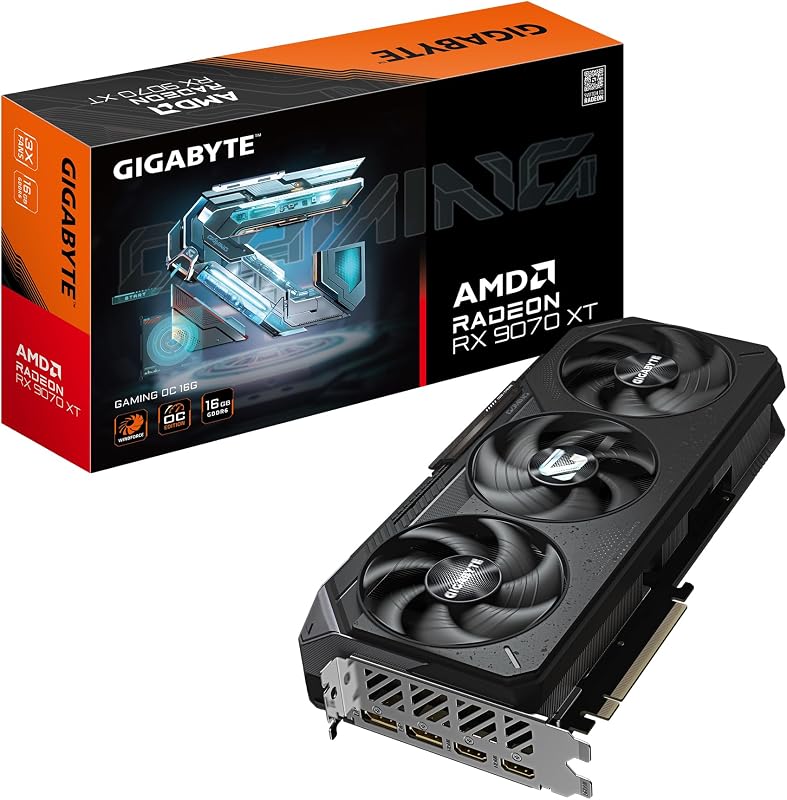
| GIGABYTE Radeon RX 9070 XT | VRAM-Heavy Timeline Workflows | Features a larger 16GB GDDR6 memory configuration on a PCIe 5.0 gaming layout. |
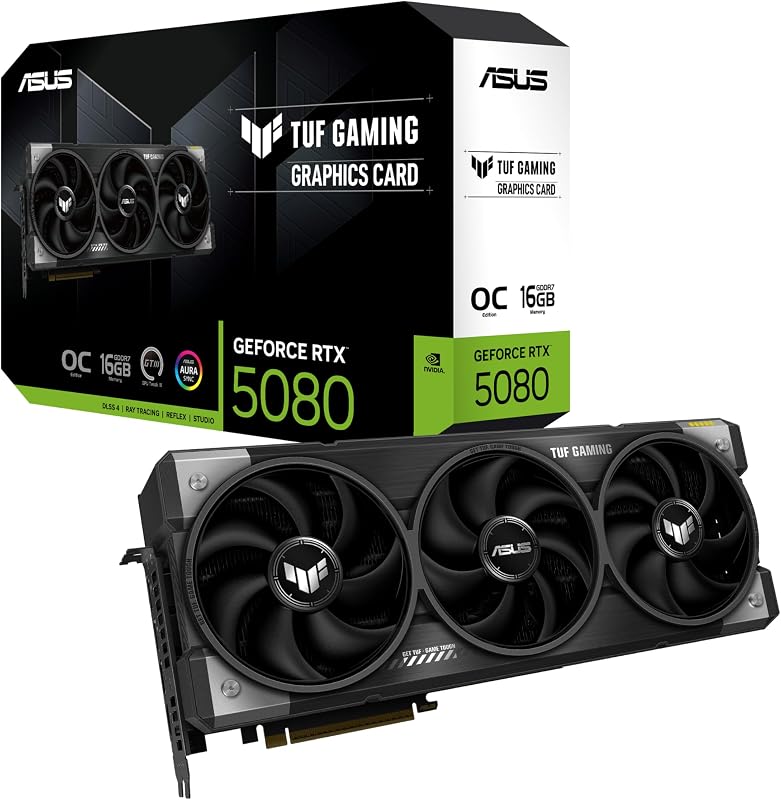
| PCIe 5.0 ASUS TUF Gaming GeForce RTX 5080 | Heavy Studio Desktop Rigs | Larger 3.6-slot thermal footprint, 16GB GDDR7 memory, and military-grade component construction. |
| ASRock Radeon RX 9070 Challenger | Standard Desktop Video Rigs | Built with 16GB GDDR6 on a 256-bit bus, 2520MHz boost clock, and triple-fan shroud. |
Choosing between these graphics cards depends on your chassis volume, memory capacity demands, and architecture requirements. If your projects involve massive uncompressed raw footage caches that exceed standard frame buffers, the 16GB GDDR6 pools on the GIGABYTE Radeon RX 9070 XT or ASRock Radeon RX 9070 Challenger provide more physical VRAM capacity. On the other hand, editors working within full-tower studio workstations who desire higher rendering tiers without space constraints will find heavier options like the rtx 5080 tuf card suited for unconstrained cases. For editors who specifically prioritize small-form-factor compatibility, the 2.5-slot profile and 1005 AI TOPS of the ASUS Prime RTX 5070 represent the ideal middle ground between physical footprint and performance.
Bottom Line
The ASUS Prime GeForce RTX 5070 proves that modern creative workstations do not need to rely on massive, four-slot graphics cards to achieve desktop rendering velocity. By marrying NVIDIA Blackwell computing power and 12GB of responsive GDDR7 video memory with a compact 2.5-slot thermal shroud, ASUS delivers a balanced graphics solution tailored to the demands of portable editing workstations.
Its combination of triple Axial-tech cooling fans, an advanced phase-change thermal interface pad, and a physical Dual BIOS switch provides quiet, reliable operation inside space-restricted chassis. For creative professionals, visual artists, and mobile video editors building transportable desktop systems, small form factor RTX 5070 editing offers an exceptional blend of form factor agility and computational power.
FAQ
Does the ASUS Prime GeForce RTX 5070 fit inside small form factor enclosures?
Yes, this card is specifically designated as an SFF-Ready enthusiast card and features a compact 2.5-slot height profile. However, because the card measures 12 inches in length and 5 inches in width, you must ensure your specific small-form-factor case provides at least 12 inches of horizontal clearance inside the GPU compartment.
How does the physical Dual BIOS switch function on this card?
The card features an integrated hardware switch located along its top edge that toggles between Performance and Quiet operational modes. The Quiet mode uses a relaxed fan curve to minimize operational acoustics during audio-sensitive tasks, while Performance mode maximizes fan speed and air pressure to keep GPU temperatures as low as possible during heavy export workloads.
What display interfaces and resolutions does the card support?
The card provides video connectivity via DisplayPort and HDMI ports compliant with HDMI/DP 2.1 standards. According to the manufacturer listing, the maximum supported display resolution is 3840×2160.
What accessories are included inside the retail packaging?
The retail package contains the ASUS Prime GeForce RTX 5070 graphics card, an ASUS hook-and-loop fastener strap, a speed setup manual, a thank-you card, and a 1-to-2 power adapter cable. The listing does not include physical display monitor cables.
How does the phase-change GPU thermal pad improve cooling?
The premium phase-change GPU thermal pad improves heat transfer by transitioning states under thermal load to fill microscopic voids between the GPU silicon die and the heatsink baseplate. This enhances heat dissipation into the triple Axial-tech heatsink array, lowering operating temperatures and supporting component longevity under prolonged rendering cycles.
How this site works
- 1,839reviews published
- 2,323products with a score
- 2,260products with listed features
- 84brands covered
Prices, stock and specifications are read from the Amazon product listing. We do not run lab tests of our own; scores are out of 10, based on listed specifications and buyer feedback, not a verdict from a test bench. We track one retailer, so prices here are not a comparison.