Waveshare Compute Module 4: The Ultimate Compact Board for Mobile Workflows
Packing reliable computational hardware for mobile field deployments, overland expeditions, and remote content workflows has traditionally forced travelers to accept frustrating mechanical trade-offs. Standard single-board computers often arrive with tall, fixed interface blocks, rigid Ethernet jacks, and fragile microSD card slots that protrude awkwardly in transit packs and invite physical strain under heavy travel conditions.…
By Noah Archer
10 min read


Reviewed
Waveshare Compute Module 4
Our score
Very well liked
Based on listed specifications — not from testing of our own.
Price today
| Amazon | Not listed | View deal |
|---|
- Sold by waveshare, shipped by Amazon
We track one retailer, so this is not a price comparison. Affiliate link; price and stock come from the listing and change without notice.
What you need to know
- At the center of this compact board is the Broadcom BCM2711 system-on-chip, engineered with four ARM Cortex-A72 64-bit processor cores running at a brisk 1.5 GHz… Waveshare Compute Module 4 Features Explained
- Custom ultra-thin keyboard computer core engineered to plug into hotel monitors or portable flat screens during international business travel. Best Use Cases
- The Waveshare Compute Module 4 does not feature standard full-size USB ports, HDMI sockets, audio outputs, or barrel-jack power connectors directly on its perimeter. Before You Buy
- If you need an immediate standalone micro-desktop complete with thermal accessories and an enclosure without purchasing a separate carrier board, the Raspberry Pi 5… How It Compares With Similar Picks
- The Waveshare Compute Module 4 is a superbly engineered hardware core that caters perfectly to travelers, digital nomads, and embedded system builders who value… Bottom Line
One line lifted from each section below — follow the link to read that section in full.
As Amazon Associates, we earn from qualifying purchases. This means we may receive a small commission at no extra cost to you if you click through and make a purchase.
Packing reliable computational hardware for mobile field deployments, overland expeditions, and remote content workflows has traditionally forced travelers to accept frustrating mechanical trade-offs. Standard single-board computers often arrive with tall, fixed interface blocks, rigid Ethernet jacks, and fragile microSD card slots that protrude awkwardly in transit packs and invite physical strain under heavy travel conditions. The Waveshare Compute Module 4 solves this portability dilemma by condensing the core processing engine into an ultra-slim mezzanine format. By stripping away extraneous desktop bulk and routing high-speed connections through flat underside interfaces, this module allows mobile creators and embedded system builders to construct sleek, purpose-built mobile computing gear that slides easily into pack pockets without wasting an ounce of luggage space.
After an exhaustive technical evaluation of its architecture and system metrics, our waveshare compute module 4 review finds that this compact compute unit delivers top-tier embedded performance for specialized on-the-go workstations. Combining an efficient quad-core ARM processor, a massive memory buffer, high-integrity solid-state onboard storage, and industrial-grade wireless flexibility, it establishes a dependable hardware baseline for demanding off-grid tasks. Whether you are assembling a lightweight field backup hub, a portable telemetry terminal, or a dedicated headless mobile server, this board balances computational agility with low-draw electrical discipline.
Quick Verdict
The Waveshare Compute Module 4 stands out as a high-density, battery-conscious computing solution that redefines what field technicians and mobile professionals can achieve with custom portable gear. By abandoning conventional desktop port layouts in favor of an ultra-flat mezzanine standard, it grants total structural freedom to embed robust processing power inside tightly packed luggage, weatherproof chassis, or mobile camera rigs.
- Upgraded 64-bit quad-core BCM2711 processor clocked at 1.5 GHz provides ample muscle for remote data operations
- Expansive 8GB LPDDR4 system memory enables smooth multitasking and intensive data processing without memory bottlenecks
- Fast 32GB onboard eMMC flash delivers data transfer speeds four times faster than previous generation hardware
- Dual antenna wireless interface offers dependable connectivity through either an onboard trace or external antenna leads
Waveshare Compute Module 4 Features Explained
Broadcom BCM2711 Quad-Core Processing Architecture
At the center of this compact board is the Broadcom BCM2711 system-on-chip, engineered with four ARM Cortex-A72 64-bit processor cores running at a brisk 1.5 GHz clock speed. This modern architecture provides a dramatic performance uplift over earlier embedded boards, delivering the raw processing capacity needed to manage automated camera offloading, live telemetry analysis, and complex network routing in mobile basecamps. When paired with smart mobile production tools such as the dji rs5 mini on demanding field shoots, having a capable 64-bit processing core running background synchronization scripts ensures your field footage transfers rapidly without thermal hiccups or stuttering system processes.
Thermal management and power efficiency are essential when operating far from standard mains electricity, and the compute module 4 power consumption characteristics make it particularly suitable for battery-supported travel rigs. Because the board dispenses with power-draining peripheral controllers like secondary USB hubs, passive display bridges, and integrated multi-port power networks found on desktop boards, system designers can supply electrical current exclusively to the circuits their mobile kit genuinely requires. When paired with high-efficiency direct DC step-down converters or standard USB power delivery banks, this lean computational footprint lets field crews extend their daily operational uptime significantly.
High-Capacity 8GB LPDDR4 System Memory
System memory constraints frequently compromise mobile computing workflows, causing unexpected application crashes or forced reliance on sluggish disk-based swap partitions during complex tasks. This raspberry pi compute module 4 8gb variant addresses that operational limit directly by packing 8GB of high-density LPDDR4 memory onto its miniature circuit board. The listing specifies that the underlying hardware platform supports configurations spanning 1GB, 2GB, 4GB, and 8GB allocations, making this 8GB top-specification build capable of compiling large software source repositories, handling memory-heavy telemetry databases, and parsing multi-gigabyte RAW image directories without slowing down.
For mobile content creators who combine field cameras with portable stabilizing equipment like the dji osmo mobile 7p, having 8GB of volatile RAM allows you to establish swift in-memory caching drives and high-speed temporary queues. The board can effortlessly coordinate background image processing pipelines, host local Wi-Fi control consoles, and manage parallel backup transfers to encrypted solid-state drives simultaneously. Furthermore, the modern LPDDR4 memory architecture minimizes operational power draw, keeping operating temperatures stable within tight, unventilated protective cases during hot outdoor operations.
Industrial 32GB eMMC Solid-State Storage
Data integrity is a constant worry when operating mobile computers in demanding transit environments subject to vibrations, sudden impacts, and erratic outdoor power supplies. Traditional single-board setups rely heavily on removable microSD media, which are notorious for mechanical dislocation, slow write degradation, and corrupted file structures during unexpected power disconnects. The compute module 4 emmc storage architecture solves this problem permanently by soldering an industrial 32GB solid-state storage chip directly to the top layer of the circuit board, providing an ultra-reliable, shockproof primary storage environment.
Beyond its physical durability against trail vibration and rough transport, this integrated 32GB eMMC storage module delivers exceptional throughput metrics of up to 100 MBytes per second. According to official hardware data, this represents a fourfold speed increase compared to the previous CM3+ generation, producing immediate real-world benefits in the form of accelerated operating system boot sequences, lightning-fast application launches, and sustained data ingestion bandwidth. When you are writing critical expedition logs or operating system binaries in remote corners of the world, having resilient, high-speed solid-state flash soldered in place provides critical reassurance.
Integrated Radio Module with Dual Antenna Versatility
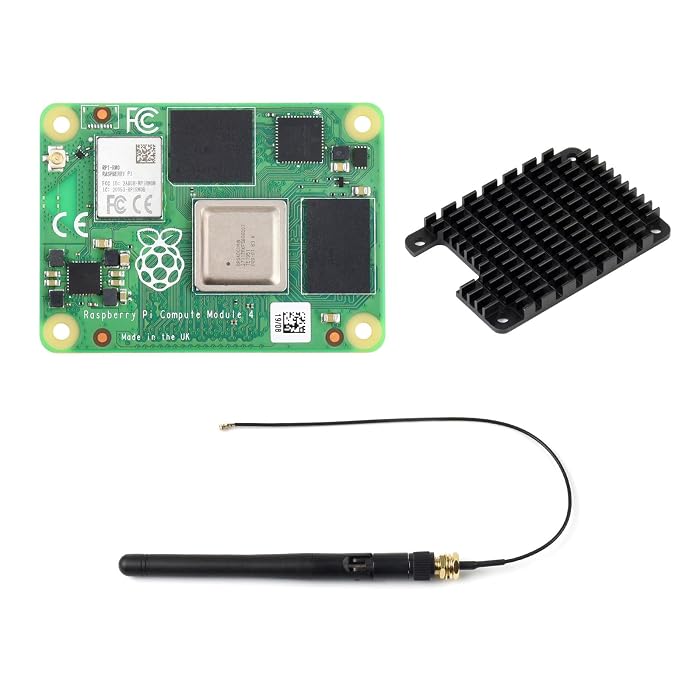
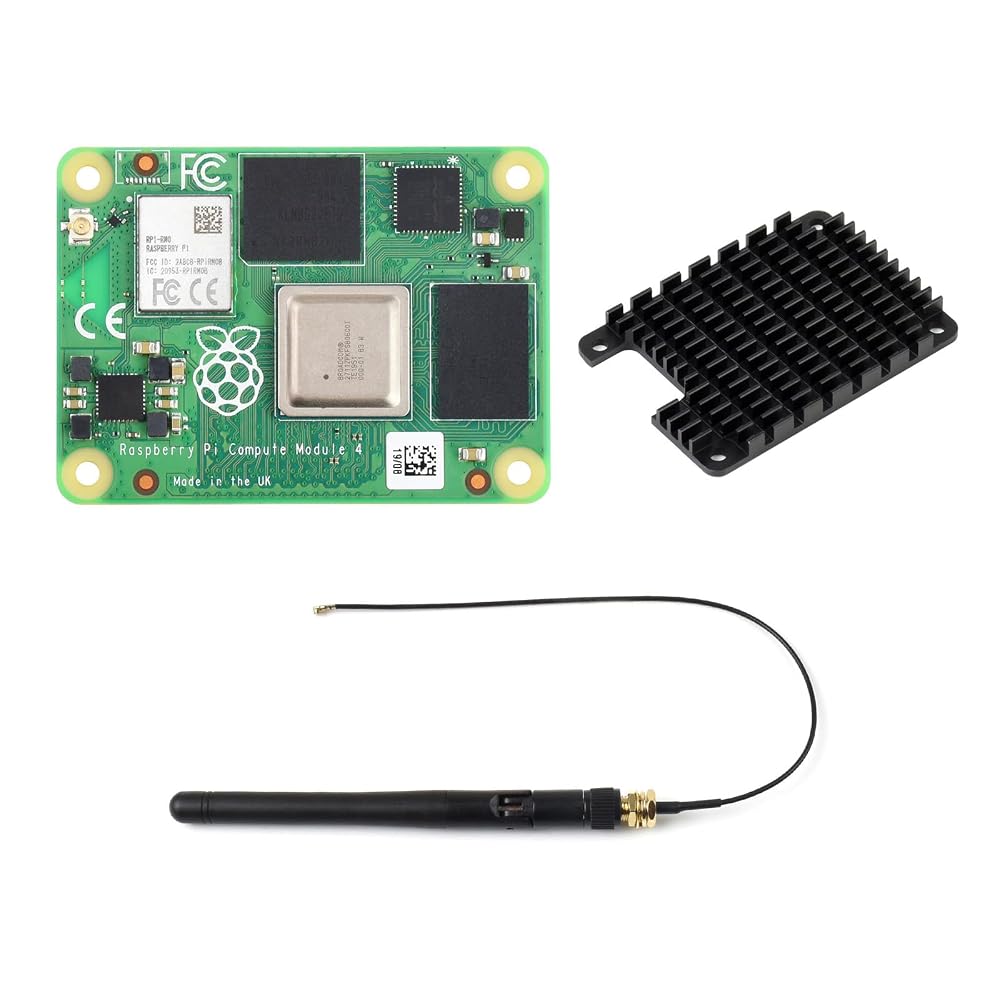
Maintaining solid network communication across dispersed campsites, vehicle rigs, and remote airfields requires versatile wireless engineering. The onboard radio module matches the certified wireless performance found on mainstream full-sized boards, providing flexible Radio Frequency and Wi-Fi connectivity across both 2.4 GHz and 5.0 GHz spectrums. What makes the compute module 4 wifi performance stand out for specialized field hardware is its adaptable dual-antenna hardware path, which supports both a built-in PCB trace antenna and an external antenna port.
When computing hardware is mounted inside sealed metal gearboxes, thick Pelican cases, or carbon-fiber travel frames, standard internal PCB trace antennas can suffer severe signal attenuation and packet dropouts. The option to attach an external antenna via a dedicated micro-coaxial connector allows field technicians to lead an external high-gain antenna through the equipment enclosure, guaranteeing long-distance links to auxiliary travel accessories such as the celestron skyportal wifi module or mobile satellite hotspots. This industrial radio adaptability ensures that your remote communication lines remain robust regardless of the physical shielding around your portable computer.
Specs
| Brand | Waveshare |
|---|---|
| Model Number | CM4108032 (Package A) |
| Processor Architecture | ARM Cortex-A72 (BCM2711) 64-bit Quad-Core |
| CPU Clock Speed | 1.5 GHz |
| Installed RAM | 8 GB LPDDR4 |
| Onboard Storage | 32 GB eMMC Flash (up to 100 MBytes/s data rate) |
| Wireless Connectivity | Wi-Fi (Radio Frequency) with PCB trace and external antenna options |
| Compatible Peripherals | Computers, monitors, keyboards, and other peripherals (via carrier) |
| Item Weight | 0.1 kg |
| Package Quantity | 1 item |
Full spec sheet from the listing (17 entries)
| 0 | RAM Memory Installed, 8 GB |
|---|---|
| 1 | Connectivity Technology, Wi-Fi |
| 2 | Processor Brand, ARM |
| 3 | Wireless Compability, Radio Frequency |
| 4 | Compatible Devices, computers, monitors, keyboards, and other peripherals |
| 5 | RAM Memory Technology, LPDDR4 |
| 6 | Brand, waveshare |
| 7 | Model Name, CM4108032 Package A |
| 8 | Number of Items, 1 |
| 9 | Item Weight, 0.1 kg |
| 10 | Manufacturer, Waveshare |
| 11 | Model Number, CM4108032 |
| 12 | Mfr Part Number, CM4108032 |
| 13 | Best Sellers Rank, #1,257 in Single Board Computers (Computers & Accessories) |
| 14 | ASIN, B09BJL3HN8 |
| 15 | Ram Memory Installed Size, 8 GB |
| 16 | CPU Manufacturer, ARM |
Quoted from the product listing, not measured by us.
Waveshare Compute Module 4 Pros and Cons
Pros
- Generous 8GB LPDDR4 memory configuration
- Fast 32GB eMMC storage up to 100MBps
- Quad-core 1.5GHz 64-bit ARM processor
- Dual antenna support with external option
- Featherweight 0.1kg form factor
Cons
- Requires separate carrier baseboard
- No pre-soldered standard USB ports
- Carrier board not included in box
Check Waveshare Compute Module 4 on Amazon
Best Use Cases
- Automated travel backup terminal designed to ingest and mirror media files from SD cards onto portable SSDs without requiring a laptop.
- Ultra-compact headless wireless network router for orchestrating remote telemetry gear and IoT sensors at off-grid research camps.
- Low-profile flight management computer built into compact mobile drone cases to monitor live flight telemetry and battery statistics.
- Custom ultra-thin keyboard computer core engineered to plug into hotel monitors or portable flat screens during international business travel.
Before You Buy
Before ordering this board, it is critical to understand the mechanical nature of a system-on-module. The Waveshare Compute Module 4 does not feature standard full-size USB ports, HDMI sockets, audio outputs, or barrel-jack power connectors directly on its perimeter. Instead, all system input and output signals are routed through two high-density 100-pin mezzanine connectors on the underside of the PCB. Operating this hardware requires a compatible carrier board or custom baseboard to break out those signals into usable physical ports. The listing supplies only the standalone module itself, meaning you must provide your own carrier platform, compatible power supply, external antenna pigtails, and any necessary passive heatsinks.
Buyers should also verify their exact hardware configuration needs prior to purchase. The product line spans diverse variants across 1GB, 2GB, 4GB, and 8GB RAM capacities, alongside different eMMC storage sizes and variants without wireless hardware. This specific listing, model number CM4108032, features the high-tier 8GB RAM, 32GB onboard eMMC storage, and integrated wireless module. The product listing does not specify whether any operating system comes pre-flashed onto the internal flash, so users should plan to mount the module onto an appropriate carrier board with USB provisioning capabilities to write their preferred Linux distribution to the eMMC flash before departure.
How It Compares With Similar Picks
| Product | Best For | Key Difference |
|---|---|---|
| Waveshare Compute Module 4 | Custom lightweight enclosures, mobile field hubs, and slim embedded gear | Modular mezzanine form factor with 8GB RAM, 32GB eMMC, and dual antenna routing |
| Libre Computer Le Potato Mini | Budget-conscious basic computing on a traditional development board | Traditional single-board computer design with 2GB RAM and an external USB Wi-Fi 4 adapter |
| Orange Pi 4 Pro 4GB | Edge machine vision, on-device AI tasks, and high-frequency workloads | 8-core 2.0 GHz Allwinner A733 processor featuring a 3TOPS AI NPU and Wi-Fi 6 |
| Raspberry Pi 5 4GB Kit | Turnkey plug-and-play desktop computing right out of the box | Complete retail bundle including 4GB RAM, standard peripheral ports, active cooler, and ABS case |
Deciding between these options depends entirely on whether your mobile travel setup demands custom physical integration or instant out-of-the-box utility. In the classic debate of compute module 4 vs raspberry pi 4 or next-generation alternatives, the standard desktop-oriented boards make trade-offs in thickness and physical layout. If you need an immediate standalone micro-desktop complete with thermal accessories and an enclosure without purchasing a separate carrier board, the Raspberry Pi 5 4GB Kit provides immediate operation right from the box. Creators focusing on cutting-edge neural processing or artificial intelligence at the edge might lean toward the Orange Pi 4 Pro 4GB, which provides a fast 2.0 GHz octa-core SoC, a dedicated 3TOPS AI NPU, and cutting-edge Wi-Fi 6. If your requirements are modest and center around basic Linux tasks, the Libre Computer Le Potato Mini offers a bare-bones layout with 2GB RAM and bundled USB Wi-Fi. However, when your design goal is an ultra-slim profile, custom connector placement, and shockproof eMMC storage for life on the road, the Waveshare Compute Module 4 remains the definitive choice.

Bottom Line
The Waveshare Compute Module 4 is a superbly engineered hardware core that caters perfectly to travelers, digital nomads, and embedded system builders who value physical compactness and solid-state resilience. With an 8GB LPDDR4 memory pool, vibration-proof 32GB eMMC storage, and an efficient quad-core ARM processor packed into an ultralight 0.1 kg footprint, it brings desktop-class capability into form factors that standard single-board machines cannot physically achieve.
While the necessity of acquiring an external carrier board means it is not a grab-and-go solution for complete beginners, that modular separation is precisely what makes it so advantageous for specialized travel kits. If you are preparing to construct an ultra-lean field server, a compact vehicle telemetry computer, or a weather-sealed travel companion that draws modest battery power without compromising processing capability, this board delivers an exceptional hardware platform for mobile innovation.
FAQ
Is compute module 4 worth it for travel and mobile field rigs?
Yes, the module is an outstanding investment for mobile workflows where spatial volume, weight, and vibration resistance are critical considerations. Its tiny profile and low power requirements allow it to run comfortably from standard portable power banks, while the lack of bulky pre-soldered peripheral jacks allows travelers to assemble extremely thin, protective enclosures tailored to their exact pack dimensions.
What extra equipment is required to use the Waveshare Compute Module 4?
Because this board is a mezzanine-style compute module without built-in full-size ports, you must pair it with a compatible baseboard or carrier board. The carrier board breaks out the underside high-density connections into standard interfaces like USB, HDMI, and power inputs. You will also need a stable power supply matching your carrier specifications and an external antenna if you plan to use an enclosed protective shell.
How does the 32GB eMMC flash compare to using a microSD card for travel?
The onboard 32GB eMMC flash offers significant advantages over microSD cards for mobile use. It delivers speeds up to 100 MBytes per second, which is four times faster than previous generation modules, resulting in snappier system performance and quicker data transfer. More importantly, because the flash is permanently soldered to the board, it cannot shake loose during bumpy travel and is far less susceptible to sudden filesystem corruption.
Can I use an external antenna with this module?
Yes, the integrated radio module supports dual antenna configurations. You can use the built-in PCB trace antenna for simple open-air designs, or attach an external antenna to the dedicated onboard connector. Using an external antenna is especially recommended when mounting the computer inside metal, carbon fiber, or dense plastic travel cases that block wireless signals.
How does compute module 4 power consumption behave under field battery power?
Because the bare module strips away idle desktop peripherals, USB hubs, and secondary display drivers, its electrical power draw is remarkably lean compared to full-sized single-board computers. When configured on an efficient carrier board, it can easily run for extended periods from common portable lithium battery packs, making it ideal for off-grid fieldwork, remote camera setups, and extended outdoor travel.
How this site works
- 607reviews published
- 2,323products with a score
- 2,260products with listed features
- 84brands covered
Prices, stock and specifications are read from the Amazon product listing. We do not run lab tests of our own; scores are out of 10, based on listed specifications and buyer feedback, not a verdict from a test bench. We track one retailer, so prices here are not a comparison.