Intel Optane Memory H10: Fast Mobile Storage or Outdated Cache?
Field editors and mobile creators face a consistent bottleneck when managing heavy multimedia projects away from a permanent studio desk. Operating on location demands storage hardware that delivers immediate responsiveness during video scrubbing, brisk operating system access, and manageable power draw so that laptop batteries are not drained before footage finishes exporting. The Intel Optane…
8 min read


Reviewed
Intel Optane H10
Our score
Liked
Based on listed specifications — not from testing of our own.
Price today
| Amazon | Not listed | View deal |
|---|
- Sold by CorteseInc
We track one retailer, so this is not a price comparison. Affiliate link; price and stock come from the listing and change without notice.
What you need to know
- The drive combines a 16 GB cache module with 256 GB of primary flash storage. Intel Optane H10 Features Explained
- Upgrading a compatible desktop operating system drive to leverage 16 GB of rapid cache acceleration for everyday application launching. Best Use Cases
- The drive relies on an M2 form factor running over a SATA 3 GB/s interface. Before You Buy
- If you manage heavy multi-stream editing workflows on a full-sized studio machine, the NVMe Internal Solid State Hard provides an expansive 2TB pool and top-tier… How It Compares With Similar Picks
- High-bitrate 4K timelines, multi-camera sequences, and tight turnaround schedules require expansive multi-terabyte pools and high-throughput connections. Bottom Line
One line lifted from each section below — follow the link to read that section in full.
As Amazon Associates, we earn from qualifying purchases. This means we may receive a small commission at no extra cost to you if you click through and make a purchase.
Field editors and mobile creators face a consistent bottleneck when managing heavy multimedia projects away from a permanent studio desk. Operating on location demands storage hardware that delivers immediate responsiveness during video scrubbing, brisk operating system access, and manageable power draw so that laptop batteries are not drained before footage finishes exporting. The Intel Optane H10 was engineered to address storage latency by merging standard flash capacity with high-speed caching memory on a single compact module, aiming to streamline everyday computing responsiveness.
Our practical verdict in this intel optane h10 review is that the drive presents substantial compromises for high-demand creative workflows. While the concept of a hybrid caching drive holds historical merit, the listing specifications detail a modest 256 GB capacity, a SATA 3 GB/s interface, a media speed of 650 MB/s, and explicit compatibility restricted to desktop systems. For traveling videographers and photographers who need expansive, high-throughput drive pools on modern mobile machines, this hardware operates more as a specialized component for legacy desktop upgrades than an ideal field-editing powerhouse.
Quick Verdict
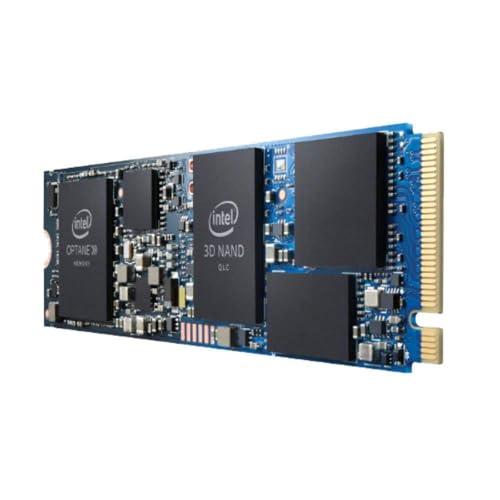
The Intel Optane H10 combines a dedicated 16 GB cache with 256 GB of onboard flash storage, making it an interesting hybrid piece of hardware with distinct boundaries. While it offers an ultra-light physical footprint of just 11.34 grams, its interface constraints and modest overall capacity limit its utility for large modern video production catalogs.
- Hybrid architecture integrates 16 GB of cache memory alongside a 256 GB solid-state drive on an M2 stick.
- Features a media speed rating of 650 MB/s running on a SATA 3 GB/s interface design.
- Extremely lightweight design weighing only 11.34 grams (0.200 lbs) for minimal physical bulk.
- Listed specifically for desktop hardware configurations rather than universal plug-and-play laptop expansion.
Intel Optane H10 Features Explained
Hybrid Cache Architecture
The core proposition of this drive centers on pairing two storage tiers on a single board. The drive combines a 16 GB cache module with 256 GB of primary flash storage. In everyday computing, this architecture is structured to keep frequently accessed files readily accessible in high-speed cache while storing the bulk of user files on the secondary flash tier. When evaluating intel optane memory vs ssd standalone units, the hybrid system attempts to bridge low-latency memory response with conventional capacity.
For creative tasks, however, 16 GB of cache fills up rapidly when importing dense camera clips or multi-track audio timelines. When a travel editor works beyond the 16 GB cache boundary, data transactions revert to the base storage layer. Understanding this hybrid split is critical when assessing whether an intel optane h10 256gb configuration aligns with modern creative suites that frequently process large individual media files.
SATA Interface and Real-World Transfer Ceiling
Performance metrics on modern storage depend heavily on interface architecture. The official product specifications indicate that this drive operates over a SATA 3 GB/s interface with a media speed rating of 650 MB/s and an overall data transfer rate of 1 gigabits_per_second. For simple file transfers and standard desktop system boot sequences, these figures provide stable baseline operation well beyond spinning mechanical media.
When measuring real-world intel optane h10 performance against heavy video pipelines, these interface numbers reveal throughput limitations. Scrubbing multiple streams of 4K footage or exporting rendered sequences requires immense sequential bandwidth. Creators researching the drive for fast production rendering should note that modern machines, such as those reviewed in our look at the asus vivobook 15.6. laptop – intel core 7 processor 150u – full hd (1920 x 1080) – 1tb ssd – windows, rely on expansive internal solid-state architecture capable of sustaining far higher sustained read and write rates.
Physical Footprint and Portability
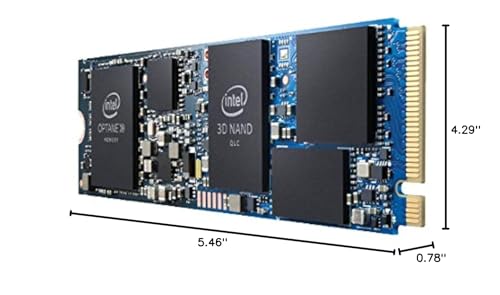
Physical bulk is a paramount consideration for mobile creators who pack their mobile office into shoulder bags and carry-ons. This drive adopts a standard M2 physical card format and registers an item weight of just 11.34 grams (0.200 lbs). The listing notes additional features identifying the component as portable, reflecting its tiny footprint and negligible weight when carried as a spare or installed in a travel chassis.
Because the hardware takes up minimal room, it does not add meaningful physical strain to a gear bag. However, because it is an internal bare module rather than a ruggedized, drop-resistant external enclosure, it requires either an internal M2 installation slot or an appropriate third-party external housing before it can travel safely in the field.
Energy Efficiency and System Load
Power consumption directly impacts runtime when editing disconnected from wall outlets. When exploring intel optane battery consumption, the small physical profile and solid-state structure inherently eliminate the mechanical drag of rotating platters. Lower mechanical draw translates into predictable thermal and electrical characteristics under standard desktop operational loads.
Nevertheless, hybrid drives handle ongoing background management to route cached data between tiers. While regular internal solid-state drives can drop into idle low-power states almost instantly, hybrid caching setups must continuously verify file access frequencies. Mobile users working on battery-focused laptops, such as the machine featured in our hp – omnibook 3 16 2k touchscreen laptop – intel core ultra 7 (2025) – 16gb memory – 512gb ssd – mic guide, generally prefer native flash solutions that maximize endurance without complex multi-tier controller draw.
Specs
| Brand | Intel |
|---|---|
| Model Number | HBRPEKNX0101A01 |
| UPC | 735858397070 |
| Digital Storage Capacity | 256 GB |
| Cache Memory Installed Size | 16 GB |
| Hard Disk Interface | SATA 3 GB/s |
| Media Speed | 650 MB/s |
| Data Transfer Rate | 1 gigabits_per_second |
| Form Factor | M2 |
| Item Weight | 11.34 g (0.200 lbs) |
| Compatible Devices & Specific Uses | Desktop |
Full spec sheet from the listing (29 entries)
| 0 | Digital Storage Capacity, 256 GB |
|---|---|
| 1 | Hard Disk Interface, SATA 3 GB/s |
| 2 | Connectivity Technology, SATA |
| 3 | Additional Features, Portable |
| 4 | Compatible Devices, Desktop |
| 5 | Specific Uses For Product, Desktop |
| 6 | Media Speed, 650 MB/s |
| 7 | Cache Memory Installed Size, 16 |
| 8 | Data Transfer Rate, 1 gigabits_per_second |
| 9 | Form Factor, M2 |
| 10 | Hardware Connectivity, Solid State Drive |
| 11 | Hard-Drive Size, 256 GB |
| 12 | Item Weight, 11.34 g |
| 13 | Number of Items, 1 |
| 14 | Brand, Intel |
| 15 | Model Number, HBRPEKNX0101A01 |
| 16 | Hard Disk Description, Solid State Drive |
| 17 | Built-In Media, 1 |
| 18 | Model Name, OPTANE H10 |
| 19 | Manufacturer, Intel |
| 20 | UPC, 735858397070 |
| 21 | Mfr Part Number, HBRPEKNX0101A01 |
| 22 | Best Sellers Rank, #611 in Internal Solid State Drives |
| 23 | ASIN, B07RM5V4TF |
| 24 | Installation Type, Internal Hard Drive |
| 25 | Color, Black |
| 26 | Enclosure Material, 3D Xpoint |
| 27 | Special Feature, Portable |
| 28 | Hard Disk Size, 256 GB |
Quoted from the product listing, not measured by us.
Intel Optane H10 Pros and Cons
Pros
- Ultra-light 11.34-gram M2 physical profile
- Dedicated 16 GB high-speed cache memory
- Compact M2 form factor footprint
- Low-noise solid-state desktop storage
Cons
- Limited 256 GB total storage capacity
- SATA 3 GB/s interface ceiling
- Restricted desktop compatibility outlined in listing
Check Intel Optane H10 on Amazon
Best Use Cases
- Upgrading a compatible desktop operating system drive to leverage 16 GB of rapid cache acceleration for everyday application launching.
- Serving as a lightweight dedicated boot drive in compact home or travel-ready mini-desktop systems.
- Handling basic productivity tasks and document management where project folder sizes remain well under 256 GB.
- Providing a quiet, ultra-light solid-state storage replacement for older spinning SATA media inside desktop workstations.
Before You Buy
Prospective buyers must inspect system architecture before choosing this drive. The listing specifications designate desktop as both the compatible device category and the specific use case. The drive relies on an M2 form factor running over a SATA 3 GB/s interface. Users attempting to install this drive into modern ultraportable laptops—like the hardware explored in our dell inspiron 14 laptop 5440 14-inch fhd+ intel core i5-1334u 8gb ram 512gb nvme ssd carbon black coverage—should note that modern mobile platforms rarely provide the hybrid SATA routing or BIOS-level Optane driver support required to operate both tiers as a unified volume.
Buyers should also understand what is included in the packaging. The listing indicates a single item containing the internal drive module itself. The listing does not specify the inclusion of M2 mounting screws, secondary thermal heatsinks, external enclosure cables, or driver software media. Anyone planning an installation must supply their own mounting hardware and verify host platform BIOS readiness before attempting deployment.
How It Compares With Similar Picks
| Product | Best For | Key Difference |
|---|---|---|
| Intel Optane H10 | Desktop Boot & Cache Acceleration | Hybrid 16 GB cache paired with 256 GB SATA 3 GB/s flash at 650 MB/s. |
| NVMe Internal Solid State Hard | High-End Workstations & Gaming | PCIe 4.0 M.2 2280 interface delivering speeds up to 7,450 MB/s across 2TB capacity. |
| Sandisk 2TB Extreme Portable SSD | Mobile Field Production & Rugged Travel | External ruggedized USB-C drive with 1050 MB/s speeds and IP65 water/dust resistance. |
| Zinc Alloy | Smartphone & Cross-Device Field Transfers | Dual USB-C and USB-A external drive at 520 MB/s for phones, tablets, and computers. |
Choosing between these components depends entirely on your operational environment and throughput requirements. If you manage heavy multi-stream editing workflows on a full-sized studio machine, the NVMe Internal Solid State Hard provides an expansive 2TB pool and top-tier PCIe 4.0 data channels reaching up to 7,450 MB/s. Field shooters needing rugged mobile units that withstand tough outdoor elements will find the Sandisk 2TB Extreme Portable SSD far more practical due to its integrated IP65 protection and universal USB-C connectivity. Finally, creators who shoot mobile footage directly onto handheld devices can look toward the Zinc Alloy external unit to offload clips across phones and laptops via dual USB-A and USB-C ports.

Bottom Line
The Intel Optane H10 represents an intriguing chapter in solid-state architecture, attempting to deliver rapid responsiveness via 16 GB of dedicated cache while maintaining a standard 256 GB primary capacity. Weighing only 11.34 grams, it integrates easily into supported desktop setups that require basic solid-state operation with modest space demands. For general desktop tasks and basic software operation, it fulfills its foundational role as an internal SATA drive.
When answering whether this drive is appropriate for modern traveling video editors, the hardware limitations cannot be overlooked. High-bitrate 4K timelines, multi-camera sequences, and tight turnaround schedules require expansive multi-terabyte pools and high-throughput connections. Unless you specifically require a 256 GB replacement drive for an older desktop system designed around Optane cache drivers, travel editors will be better served by modern high-capacity external drives or dedicated internal NVMe upgrades.
FAQ
Is intel optane worth it for modern mobile editing?
For modern mobile creative workflows, the hardware listed here faces severe operational limits. Video suites today routinely handle file transfers measuring dozens of gigabytes, rapidly outpacing a 16 GB cache tier. Once the cache fills, the drive falls back on its baseline SATA 3 GB/s throughput, which falls well behind current solid-state benchmarks.
What are the primary intel optane ssd specs to review before purchasing?
The key specifications from the listing include a 256 GB total storage capacity, 16 GB of installed cache memory, a SATA 3 GB/s interface, a 650 MB/s media speed, a data transfer rate of 1 gigabits_per_second, an M2 form factor, and a total weight of 11.34 grams (0.200 lbs).
Can I use this intel optane m.2 ssd inside any modern laptop?
The listing specifically states that this drive is intended for desktop devices and desktop uses. While modern laptops like the one featured in our samsung – galaxy book pro 360 15.6 amoled touch-screen laptop – intel evo platform core i7 – 16gb memory – 1tb ssd – mystic navy analysis utilize M.2 storage slots, hybrid caching drives often require dedicated motherboard chipset routing and Intel Rapid Storage Technology drivers that many laptop motherboards do not support.
How does this drive handle heavy file caching?
The drive utilizes its 16 GB cache to store frequently accessed operating system components and user files. While this accelerates repetitive low-volume tasks like system boots and simple application starts, it does not provide sustained acceleration across massive multi-gigabyte video render directories.
What should travel editors prioritize when selecting a portable editing drive?
Travel creators need to prioritize high sustained transfer speeds, physical durability, ample capacity of at least 1TB to 2TB, and broad cross-platform compatibility over USB-C or modern internal PCIe standards, rather than relying on legacy hybrid caching architectures.
How this site works
- 822reviews published
- 2,323products with a score
- 2,260products with listed features
- 84brands covered
Prices, stock and specifications are read from the Amazon product listing. We do not run lab tests of our own; scores are out of 10, based on listed specifications and buyer feedback, not a verdict from a test bench. We track one retailer, so prices here are not a comparison.


