Nikon 50mm f/1.2 AI-S Review: Compact Speed for Travel Shooters
Travel photographers packing for extended journeys constantly confront the tension between optical performance and luggage weight. Fast glass often means dragging hefty, motorized barrels through transit hubs, consuming precious space and quickly draining camera batteries during long days on the move. The Nikon 50mm f/1.2 AI-S directly tackles this burden by stripping away electronic motors…
8 min read


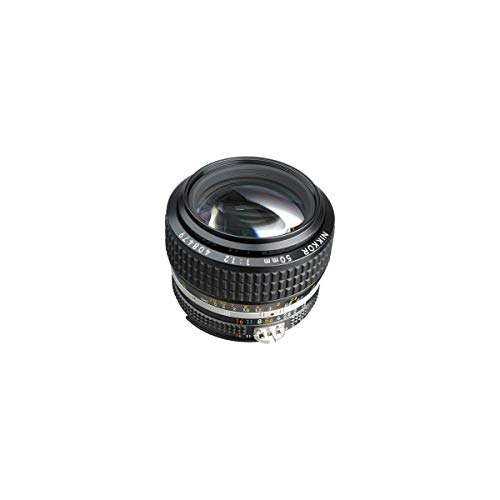
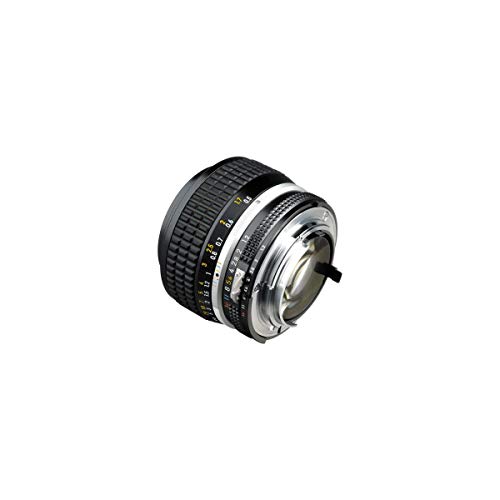
Reviewed
Nikon 50mm f/1.2 AI-S
Our score
Liked
Based on listed specifications — not from testing of our own.
Price today
| Amazon | Not listed | View deal |
|---|
- Prime eligible
- Sold by BLUE HARBOR ONLINE, shipped by Amazon
We track one retailer, so this is not a price comparison. Affiliate link; price and stock come from the listing and change without notice.
What you need to know
- Shooting in Nikon 50mm 1.2 low light conditions also delivers distinct creative depth of field control. Nikon 50mm f/1.2 AI-S Features Explained
- Night street photography in historic districts where ambient shop signs and streetlamps provide the sole illumination. Best Use Cases
- According to the listing specifications, the package includes a 52mm front cap, an LF-1 rear lens cap for F mount lenses, and a 1-year limited warranty, alongside a… Before You Buy
- Conversely, if your adventures center on distant wildlife or scenic detail compression, the telephoto zooms from Canon provide reach that a fixed 50mm manual lens… How It Compares With Similar Picks
- When asking whether is Nikon 50mm 1.2 worth it, the answer depends entirely on your travel philosophy. Bottom Line
One line lifted from each section below — follow the link to read that section in full.
As Amazon Associates, we earn from qualifying purchases. This means we may receive a small commission at no extra cost to you if you click through and make a purchase.
Travel photographers packing for extended journeys constantly confront the tension between optical performance and luggage weight. Fast glass often means dragging hefty, motorized barrels through transit hubs, consuming precious space and quickly draining camera batteries during long days on the move. The Nikon 50mm f/1.2 AI-S directly tackles this burden by stripping away electronic motors in favor of a dense, purely mechanical optical design that delivers an immense light-gathering capability in a pocketable prime form factor.
In this Nikon AI-S Nikkor 50mm f/1.2 review, our editorial evaluation focuses on whether this venerable manual prime earns a permanent spot in a minimalist travel setup. If you prioritize mechanical dependability, zero electrical power consumption, and extreme low-light readiness over automatic tracking, this standard lens presents a compelling alternative to bloated modern zooms.
Quick Verdict
The Nikon 50mm f/1.2 AI-S is a specialized prime built for deliberate travel photographers who want exceptional low-light gathering and tactile handling without burdening their packs with heavy motorized optics. While operating fully manually requires patience, its optical potential and mechanical durability make it a standout choice for night wandering and atmospheric environmental portraiture.
- Ultra-wide f/1.2 maximum aperture allows for handheld shooting in deeply shadowed travel environments.
- Pure mechanical manual focus operation draws zero camera battery power during long excursions.
- Compact prime build with a standard 52mm front filter thread keeps your travel kit light and agile.
- Nine-blade aperture diaphragm creates pleasing background separation and smooth transition zones.
Nikon 50mm f/1.2 AI-S Features Explained
Ultra-Fast Aperture and Low-Light Versatility
The defining element of this prime is its extraordinary Nikon 50mm 1.2 aperture. Having a maximum aperture opening of f/1.2 gives on-the-go photographers the ability to gather significant ambient illumination when walking through dimly lit night markets, old town alleys, or candlelit interior spaces. In challenging lighting conditions where standard f/2.8 zooms force you to compromise your shutter speed, this lens allows you to freeze subtle motion cleanly.
Shooting in Nikon 50mm 1.2 low light conditions also delivers distinct creative depth of field control. With the aperture wide open, the plane of critical focus becomes razor-thin, producing immediate visual isolation between your subject and busy backgrounds. Photographers who examine other fast glass like the canon 50mm 1.2 understand how standard prime optics at this speed create an atmospheric, three-dimensional look that separates travel portraits from ordinary tourist snapshots.
Precision Manual Focus Control
Using the Nikon 50mm 1.2 manual focus mechanism connects the photographer directly to the image-making process. Because the lens lacks internal autofocus motors, the focusing ring relies on mechanical helicoids that provide smooth, weighted tactile feedback. This level of physical resistance enables fine micro-adjustments that electronic fly-by-wire rings on modern lenses often struggle to replicate.
For street and documentary work, manual operation removes the frustration of an autofocus system hunting erratically against dim, low-contrast subjects. Once you learn to pre-focus using distance markings or rely on manual focus aids, capturing candid travel moments becomes an intentional, predictable craft. Furthermore, because no focusing motors exist inside the casing, you conserve camera battery life across long travel itineraries where charging outlets are scarce.
Compact Footprint for Travel Photography
Packing light is essential for on-the-go visual storytellers, and Nikon 50mm 1.2 travel photography benefits directly from the prime lens form factor. Unlike bulky variable-focal-length telephotos, this standard prime maintains a slim barrel that packs effortlessly into a small sling or daypack. Its 52mm front filter ring (listed as 5.2 centimeters) means you can share compact, lightweight neutral density or polarizing filters across multiple small lenses without needing bulky step-up rings.
Travelers using modern compact mirrorless systems, such as a nikon z50 ii kit with an appropriate mount adapter, can achieve a remarkably balanced walkaround setup. The lens provides a standard 46.8-degree real angle of view on full-frame formats while operating with a 1:1 zoom ratio. It delivers agility on crowded sidewalks where massive telephoto lenses draw unwanted attention.
Optical Clarity and Nine-Blade Diaphragm
Evaluating Nikon 50mm 1.2 sharpness involves understanding the character of classic Nikkor manual optics. Wide open at f/1.2, the lens delivers a gentle, glowing rendering with softer contrast that flatters portraits and atmospheric travel scenes. As you stop down to medium apertures such as f/4 or f/5.6, the central resolution tightens noticeably, delivering the crisp edge-to-edge detail needed for city architecture and documentary landscapes.
The inclusion of a 9-blade diaphragm ensures that the aperture opening maintains a rounded geometry across different f-stops. Out-of-focus highlights stay pleasingly soft rather than taking on distracting polygonal edges, which is especially valuable when shooting nocturnal streetscapes full of distant streetlamps and neon signs. When stopped down toward its minimum aperture of f/16, the diaphragm produces clean, defined sunstars around point light sources.
Specs
| Focal Length | 50 mm |
|---|---|
| Lens Design | Standard Prime |
| Lens Mount | Nikon F |
| Maximum Aperture | f/1.2 |
| Minimum Aperture | f/16 |
| Focus Type | Manual Focus |
| Diaphragm Blades | 9 |
| Real Angle Of View | 46.8 degrees |
| Filter Thread Size | 52 mm (5.2 cm) |
| Format Compatibility | FX, DX, FX in DX Crop Mode, 35mm Film |
Full spec sheet from the listing (40 entries)
| 0 | Focal Length Description, 50 mm |
|---|---|
| 1 | Lens, Standard |
| 2 | Compatible Camera Mount, Nikon F |
| 3 | Maximum Focal Length, 50 millimeters |
| 4 | Minimum Focal Length, 50 millimeters |
| 5 | Lens Design, Prime |
| 6 | Focus Type, Manual Focus |
| 7 | Lens Fixed Focal Length, 50 millimeters |
| 8 | Zoom Ratio, 1:1 |
| 9 | Image stabilization, Digital |
| 10 | Real Angle Of View, 46.8 degrees |
| 11 | Maximum Aperture, 1.2 f_stop |
| 12 | Minimum Aperture, 16 |
| 13 | Number of Diaphragm Blades, 9 |
| 14 | Compatible Camera Models, Nikon AIS camera models |
| 15 | Photo Filter Size, 5.2 centimeters |
| 16 | Lens Mount, Nikon F |
| 17 | EU Spare Part Availability Duration, 1 years |
| 18 | Lens Color, Black |
| 19 | Color, Black |
| 20 | Exposure Control Type, Manual |
| 21 | Media Type, ProductImage |
| 22 | Water Resistance Level, Not Water Resistant |
| 23 | Brand, Nikon |
| 24 | Camera Lens, Nikon AI-S FX NIKKOR 50mm f/1.2 Fixed Zoom Manual Focus Lens for Nikon DSLR Cameras |
| 25 | Model Name, 1435 |
| 26 | UPC, 018208014354 |
| 27 | Number of Items, 1 |
| 28 | Manufacturer Part Number, JAA003AB |
| 29 | Global Trade Identification Number, 00018208014354 |
| 30 | Unit Count, 1 Count |
| 31 | Built-In Media, AI-S FX NIKKOR 50mm f/1.2 Fixed Zoom Manual Focus Lens for Nikon DSLR Cameras, LC-52 Snap-on Front Lens Cap, LF-4 Rear Lens Cap |
| 32 | Item Part Number, JAA003AB |
| 33 | Item Weight, 0.03 kg |
| 34 | Manufacturer, Nikon |
| 35 | Model Number, 1435 |
| 36 | Model Series, AI-S |
| 37 | Best Sellers Rank, #2,173 in SLR Camera Lenses |
| 38 | ASIN, B00009R95Y |
| 39 | Lens Type, Standard |
Quoted from the product listing, not measured by us.
Nikon 50mm f/1.2 AI-S Pros and Cons
Pros
- Ultra-fast f/1.2 maximum aperture for dim light
- Pure mechanical manual focus operation
- Compact prime design with 52mm filter size
- Nine-blade diaphragm for smooth background rendering
- Compatible across FX, DX, and 35mm formats
Cons
- Lacks autofocus capabilities for fast action
- Listing indicates incompatibility with standard digital SLRs
- No built-in optical image stabilization in lens barrel
Check Nikon 50mm f/1.2 AI-S on Amazon
Best Use Cases
- Night street photography in historic districts where ambient shop signs and streetlamps provide the sole illumination.
- Environmental travel portraiture that smoothly blurs chaotic background crowds while emphasizing the subject.
- Minimalist backpacking expeditions where zero battery drain and mechanical reliability take priority over automation.
- Low-light indoor museum and historic architecture documentation where flash photography is prohibited.
Before You Buy
Before purchasing, it is crucial to verify your body compatibility with the Nikon 50mm f1.2 F mount system. The product listing notes compatibility with FX, DX, FX in DX crop mode, and traditional 35mm film formats, but it also mentions that it is designed for use with Nikon AIS camera models and states it is not for use with digital SLR cameras. In practice with Nikon F-mount gear, entry-level digital SLR bodies such as the nikon d5100 camera bundle lack the physical aperture indexing mechanics found on professional film or high-end digital bodies, which can restrict internal metering. If you plan to adapt this lens to modern mirrorless camera platforms, you will need a mechanical Nikon F adapter to control focus and aperture manually.
Prospective buyers should also examine what comes packaged in the retail box. According to the listing specifications, the package includes a 52mm front cap, an LF-1 rear lens cap for F mount lenses, and a 1-year limited warranty, alongside a 1-year EU spare part availability duration. The listing does not specify a dedicated lens hood, protective travel pouch, or carrying case, so you will need to source your own protective accessories to safeguard the glass during transit.
How It Compares With Similar Picks
| Product | Best For | Key Difference |
|---|---|---|
| Nikon 50mm f/1.2 AI-S | Low-light manual prime travel | Ultra-fast f/1.2 maximum aperture with purely mechanical manual focus on Nikon F mount |
| Tamron 17-70mm f 2.8 Di | Sony APS-C versatile zoom travel | Covers wide-to-telephoto focal lengths with f/2.8 constant aperture and RXD autofocus for Sony E |
| Canon RF100-400mm F5.6-8 is USM | Canon mirrorless wildlife travel | Telephoto reach from 100mm to 400mm with autofocus for Canon EOS R series cameras |
| Mirrorless Super-Telephoto Zoom Lens | Extended sports and wildlife reach | Super-telephoto zoom reach from 100mm to 500mm designed for Canon EOS R mirrorless bodies |
When deciding between these options, choose an alternative if your travel style demands rapid autofocus tracking or flexible zoom range rather than prime low-light speed. If you shoot Sony mirrorless cameras and need a standard walkaround zoom, the Tamron provides autofocus and focal versatility. Conversely, if your adventures center on distant wildlife or scenic detail compression, the telephoto zooms from Canon provide reach that a fixed 50mm manual lens cannot replicate.
Bottom Line
When asking whether is Nikon 50mm 1.2 worth it, the answer depends entirely on your travel philosophy. If you seek an effortless point-and-shoot experience where automated systems handle subject tracking, this manual lens will feel demanding on busy itineraries. However, for visual storytellers who savor mechanical precision, tactile focus control, and the creative freedom of an f/1.2 aperture in a pocket-sized package, this lens delivers a rare tactile charm.
By relying on a completely mechanical build, the lens preserves your camera battery for extended days in the field and fits comfortably into the smallest packing cubes. It is an exceptional tool for night explorers, documentary shooters, and minimalist photographers who refuse to let low light cut short their travel days.
FAQ
Does the Nikon 50mm f/1.2 AI-S feature autofocus?
No, the Nikon 50mm f/1.2 AI-S is strictly a manual focus prime lens. It does not contain internal focus motors or electronic drive pins, requiring you to manually turn the focusing ring to achieve sharp focus on your subject.
What camera mount does this lens utilize?
The lens uses the Nikon F mount. It is mechanically built according to Nikon AIS camera model specifications, making it directly compatible with native Nikon F manual bodies and adaptable to many modern mirrorless cameras via mechanical mount adapters.
How does the lens perform in low-light travel scenarios?
Thanks to its wide f/1.2 maximum aperture, the lens gathers an exceptional amount of ambient light. This allows photographers to shoot handheld in dim street settings and indoor environments without introducing extreme motion blur.
What filter size is needed for the Nikon 50mm f/1.2 AI-S?
The lens features a 52mm front filter thread, listed in the specifications as 5.2 centimeters. This standard compact thread size makes it easy to carry small polarizers, neutral density filters, or protective clear filters without adding bulk to your bag.
What accessories are included in the box?
The product listing specifies that the lens ships with a 52mm front cap, an LF-1 rear lens cap for F mount lenses, and a 1-year limited warranty. The listing does not specify a lens hood or carrying case.
How this site works
- 2,045reviews published
- 2,323products with a score
- 2,260products with listed features
- 84brands covered
Prices, stock and specifications are read from the Amazon product listing. We do not run lab tests of our own; scores are out of 10, based on listed specifications and buyer feedback, not a verdict from a test bench. We track one retailer, so prices here are not a comparison.


