NVIDIA RTX A6000 Review: Heavyweight Power for Remote Production
Mobile video editors and traveling digital creators constantly battle hardware limitations. While lightweight laptops allow seamless mobility across shoot locations, airport lounges, and hotel desks, their compact thermal envelopes and restricted video memory inevitably choke on complex 8K raw timelines, intricate color grades, and heavy visual effects. Pushing a thin laptop to process massive batch…
11 min read



Reviewed
NVIDIA RTX A6000
Buyer rating
Mixed reaction
Average of 18 Amazon ratings — not a score from testing of our own.
- 5★73%
- 4★0%
- 3★0%
- 2★0%
- 1★27%
Price today
| Amazon | Not listed | View deal |
|---|
- Sold by BestBuyBay
We track one retailer, so this is not a price comparison. Affiliate link; price and stock come from the listing and change without notice.
What you need to know
- The underlying Ampere architecture introduces CUDA cores that deliver double-speed processing for single-precision floating point (FP32) calculations. NVIDIA RTX A6000 Features Explained
- Accelerating photorealistic 3D rendering and architectural walkthroughs using second-generation RT Cores that compute ray tracing concurrently with shading and… Best Use Cases
- The listing specifies item dimensions of 15 inches in length by 9.5 inches in width, which requires a spacious desktop chassis capable of accommodating… Before You Buy
- If your projects center on standard 4K timelines, gaming, or lighter rendering where a 16-gigabyte memory buffer is adequate, consumer graphics cards provide… How It Compares With Similar Picks
- For on-the-go video editors who travel light with slim laptops, the nvidia rtx a6000 serves as the ultimate base-station powerhouse. Bottom Line
One line lifted from each section below — follow the link to read that section in full.
As Amazon Associates, we earn from qualifying purchases. This means we may receive a small commission at no extra cost to you if you click through and make a purchase.
Mobile video editors and traveling digital creators constantly battle hardware limitations. While lightweight laptops allow seamless mobility across shoot locations, airport lounges, and hotel desks, their compact thermal envelopes and restricted video memory inevitably choke on complex 8K raw timelines, intricate color grades, and heavy visual effects. Pushing a thin laptop to process massive batch exports or multi-layered simulations leads to thermal throttling and stalled production schedules. Rather than lugging around a twenty-pound mobile workstation with massive power bricks, many on-the-go creative professionals configure high-performance desktop render nodes back at their home studio, connecting remotely via low-latency software. The NVIDIA RTX A6000 is engineered specifically to serve as the computing backbone of such creative pipelines, delivering workstation reliability and an enormous memory buffer that eliminates the memory crashes common on consumer gear.
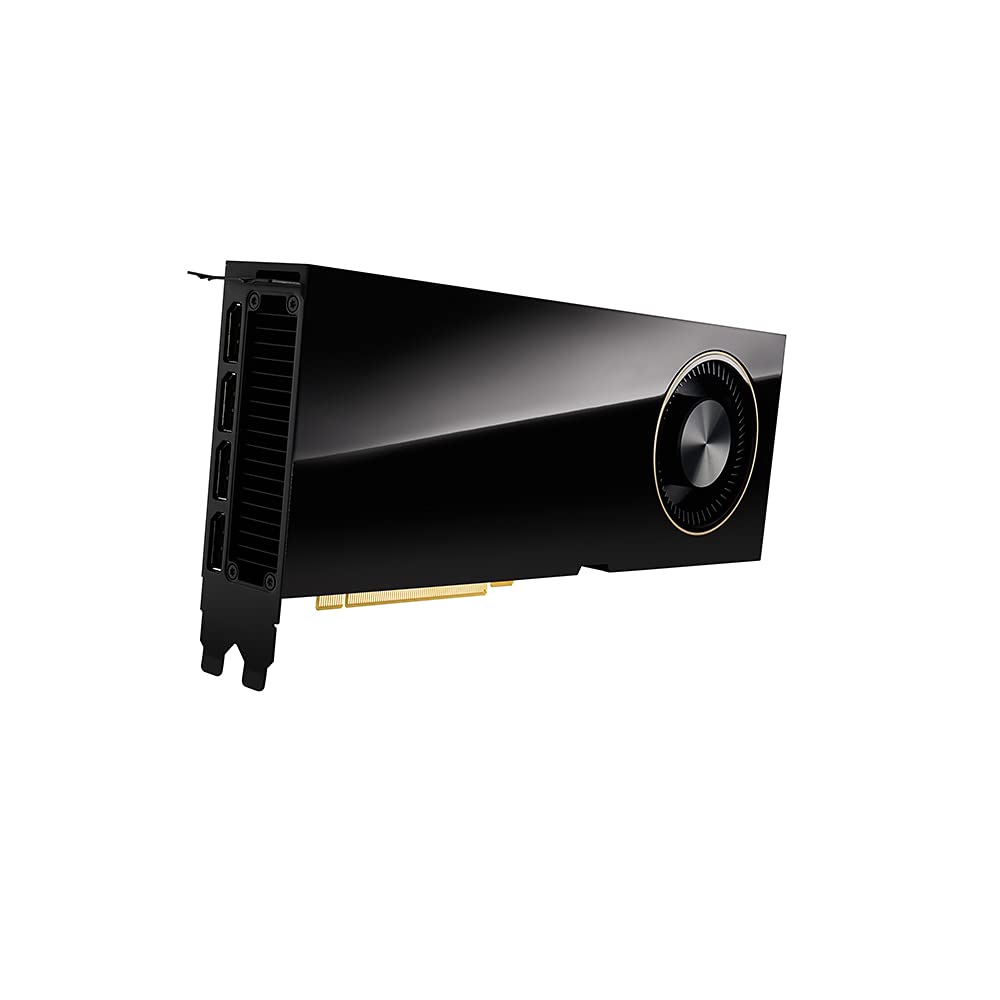
As a visual computing card built on the NVIDIA Ampere architecture, this graphics processor provides 48 gigabytes of GDDR6 memory, making it an extraordinary studio base station for handling punishing post-production bottlenecks. For mobile editors who need an unyielding stationary render engine to chew through overnight transcodes, architectural renders, and timeline exports without running out of memory, it represents a definitive workstation solution. While its desktop-only PCI-Express x16 footprint and blower-fan design require a dedicated desktop tower, its computational throughput transforms how traveling creators manage heavy production workflows from afar.
Quick Verdict
The NVIDIA RTX A6000 is an enterprise-grade visual computing GPU designed for high-demand creative professionals who refuse to let hardware limits stall complex production projects. Delivering 48 gigabytes of GDDR6 memory, second-generation RT Cores, and third-generation Tensor Cores, this card excels as an uncompromising stationary render node that remote editors can access from lightweight travel laptops.
- Enormous 48 GB GDDR6 memory prevents out-of-memory errors on heavy multi-stream 8K video timelines and complex 3D scenes.
- Ampere architecture delivers double-speed FP32 processing alongside advanced ray tracing and AI hardware acceleration.
- Third-generation NVLink support enables multi-GPU scaling up to 96 GB of unified memory for extreme simulation datasets.
- Single-fan blower cooling and desktop PCI-Express x16 form factor require an expansive workstation enclosure with robust airflow.
NVIDIA RTX A6000 Features Explained
Ampere Architecture and CUDA Processing
At the heart of this visual computing card lies the nvidia ampere a6000 design, which fundamentally changes how heavy mathematical operations are executed during creative tasks. The underlying Ampere architecture introduces CUDA cores that deliver double-speed processing for single-precision floating point (FP32) calculations. In real-world desktop operations, this dual-path compute capability means that intensive graphics pipelines, simulation workflows, and computer-aided design tasks complete substantially faster than on preceding workstation generations.
Beyond pure calculation speed, the architecture enhances general compute efficiency across graphics and simulation environments. For video editors working with high-bitrate media and heavy noise reduction passes, these architectural enhancements maintain steady frame processing. When functioning as a remote rendering station, a dedicated nvidia rtx a6000 workstation reliably handles continuous background renders while mobile editors continue editing lightweight proxies on their portable laptops from the field.
Massive 48GB GDDR6 Memory Buffer
The standout specification of this workstation card is its rtx a6000 48gb memory capacity, engineered with ultra-fast GDDR6 memory. Most consumer graphics cards provide between 8 and 16 gigabytes of video RAM, which quickly creates a catastrophic bottleneck when handling uncompressed cinema footage, multi-camera 8K RED or ARRIRAW media, and extensive node graphs in DaVinci Resolve. When a project exhausts available video memory, host applications frequently crash to desktop or drop render tasks completely. Having 48 gigabytes of dedicated VRAM ensures that extensive timelines, large asset caches, and complex visual effects remain fully resident in local memory without spilling over into sluggish system RAM.
For professional video editors comparing this capacity against options like the rtx pro 5000, having a 48-gigabyte buffer represents complete freedom from timeline degradation during multi-stream compositing. Furthermore, for studios working with extreme computational datasets, third-generation NVIDIA NVLink allows two cards to be linked together to create a unified pool of 96 gigabytes of memory, providing creative professionals the stability required to complete complex commercial deliverables without compromising timeline fidelity.
Second-Generation RT Cores for 3D Rendering
Hardware-accelerated ray tracing has transitioned from a specialized luxury into an everyday requirement for modern visual media, and this GPU incorporates second-generation RT Cores to address those demands. These dedicated cores deliver up to two times the throughput of the previous generation, dramatically improving rtx a6000 3d rendering performance. More importantly, the second-generation design allows concurrent execution of ray tracing alongside shading or denoising calculations, cutting down the compute cycles necessary to resolve photorealistic lighting, reflections, and ambient occlusion.
In production pipelines such as architectural visualization, product rendering, and cinematic VFX, this capability reduces overnight batch rendering times to a fraction of traditional render cycles. Remote editors can queue multiple complex rendering passes on their studio base station before leaving their desk, knowing that the RT Cores will handle the shading and denoising workloads concurrently. As studio hardware evolves toward architectures seen in cards like the rtx 6000 pro blackwell, the second-generation RT cores in the Ampere platform remain a reliable standard for heavy studio output.
Third-Generation Tensor Cores for AI Workflows
Modern video editing suites and visual effects tools increasingly rely on machine learning algorithms for tasks like neural upscaling, optical flow speed changes, object isolation, and automated scene cut detection. The NVIDIA RTX A6000 integrates third-generation Tensor Cores featuring Tensor Float 32 (TF32) precision. This hardware precision standard delivers up to five times the model training throughput compared to previous-generation silicon without demanding custom code changes from the user, accelerating the deployment of AI models right out of the box.
In addition to TF32 acceleration, these Tensor Cores incorporate hardware support for structural sparsity, which effectively doubles the throughput for neural network inference. For video editors executing AI-powered rotoscoping, smart reframing, or automated voice isolation, structural sparsity allows algorithms to execute in near real time. Rather than relying on cloud-based AI subscription services that require uploading gigabytes of sensitive footage over unstable travel Wi-Fi, mobile creators can run local AI operations directly on their studio desktop workstation.
Third-Generation NVIDIA NVLink Scalability
When a project outgrows the processing capabilities or memory limits of a single graphics accelerator, traditional systems often encounter severe communication bottlenecks over standard motherboard buses. The NVIDIA RTX A6000 addresses this through third-generation NVIDIA NVLink technology. This physical high-speed interconnect bridges two cards directly, providing massive GPU-to-GPU bandwidth that treats two physical cards as a singular, coherent computing engine with a combined pool of 96 gigabytes of memory.
This scalability proves invaluable for complex 3D simulation workflows, large-scale engineering computations, and massive multi-layer visual effects compositing. Rather than dividing render data into small chunks that must be shuffled back and forth across system memory, NVLink allows the entire dataset to reside across both graphics cards simultaneously. For production studios building dedicated compute racks or high-end rendering nodes, this level of memory scaling ensures the system remains capable of tackling evolving computational challenges.
Specs
| Graphics Coprocessor | NVIDIA RTX A6000 |
|---|---|
| GPU Architecture | NVIDIA Ampere |
| GPU Series | NVIDIA Quadro |
| Graphics RAM Capacity | 48 GB |
| Graphics RAM Type | GDDR6 |
| GPU Clock Speed | 1860 megahertz |
| Graphics Card Interface | PCI-Express x16 |
| Video Output Interface | HDMI |
| Maximum Display Resolution | 7680 x 4320 |
| Number of Fans | 1 |
| Item Dimensions | 15"L x 9.5"W |
| Model Name | VCNRTXA6000-PB |
Full spec sheet from the listing (30 entries)
| 0 | Graphics Coprocessor, NVIDIA RTX A6000 |
|---|---|
| 1 | Graphics Card Ram, 48 GB |
| 2 | GPU Clock Speed, 1860 megahertz |
| 3 | Video Output Interface, HDMI |
| 4 | Graphics Ram Type, GDDR6 |
| 5 | Compatible Devices, Desktop |
| 6 | Graphics Card Interface, PCI-Express x16 |
| 7 | Number of Fans, 1 |
| 8 | GPU Series, NVIDIA Quadro |
| 9 | Display Maximum Resolution, 7680 x 4320 |
| 10 | Display Resolution Maximum, 7680×4320 |
| 11 | Item Dimensions L x W, 15"L x 9.5"W |
| 12 | Brand, PNY |
| 13 | Video Processor, NVIDIA |
| 14 | Antenna Location, Professional |
| 15 | Built-In Media, NVIDIA RTX A6000 |
| 16 | Model Name, VCNRTXA6000-PB |
| 17 | Graphics Description, NVIDIA RTX A6000 |
| 18 | Unit Count, 1 Count |
| 19 | Manufacturer, NVIDIA |
| 20 | Number of Items, 1 |
| 21 | UPC, 751492641263 |
| 22 | Item Weight, 2.6 pounds |
| 23 | Model Number, VCNRTXA6000-PB |
| 24 | Mfr Part Number, VCNRTXA6000-PB |
| 25 | Warranty Description, 3 Years |
| 26 | Best Sellers Rank, #1,513 in Computer Graphics Cards |
| 27 | ASIN, B09BDH8VZV |
| 28 | Customer Reviews, 3.9 3.9 out of 5 stars (18) 3.9 out of 5 stars |
| 29 | Graphics Ram Size, 48 GB |
Quoted from the product listing, not measured by us.
NVIDIA RTX A6000 Pros and Cons
Pros
- Massive 48GB GDDR6 memory buffer
- Ampere architecture with double-speed FP32 compute
- Second-generation RT Cores for fast ray tracing
- Third-generation Tensor Cores with TF32 precision
- NVLink memory scaling up to 96GB
Cons
- Large 15-inch card requires full-size chassis
- Single-fan blower cooling increases noise under load
- Requires dedicated desktop power infrastructure
Check NVIDIA RTX A6000 on Amazon
Best Use Cases
- Serving as a remote studio base-station render engine for mobile video editors offloading 8K RAW video timelines from ultraportable laptops.
- Accelerating photorealistic 3D rendering and architectural walkthroughs using second-generation RT Cores that compute ray tracing concurrently with shading and denoising.
- Processing complex multi-layer color grading and visual effects node trees in DaVinci Resolve without memory overruns.
- Running local AI model training and real-time inference tasks leveraging third-generation Tensor Cores with TF32 precision and structural sparsity.
- Handling massive engineering simulations and large visual datasets scaled across two cards using third-generation NVLink.
Before You Buy
Before integrating this workstation graphics card into your workflow, you must evaluate the physical dimensions and power requirements of your intended host desktop. The listing specifies item dimensions of 15 inches in length by 9.5 inches in width, which requires a spacious desktop chassis capable of accommodating enterprise-class cards without obstructing internal drive bays or cabling. Cooling is handled by a single blower-style fan designed to exhaust hot air directly through the rear bracket of the case, which maintains stable temperatures inside high-density multi-GPU enclosures but can produce noticeable acoustic output under sustained load. In terms of electrical demands, evaluating rtx a6000 power consumption is crucial for maintaining stability; while the listing does not specify the exact total board wattage or specific power connector configuration, running a high-end Ampere visual computing card demands a robust, continuous power supply with sufficient dedicated PCIe power leads.
It is equally important to inspect the configuration and accessories included in the retail packaging. The listing identifies this specific offering as model VCNRTXA6000-PB from brand PNY, featuring an HDMI video output interface that supports a maximum display resolution of 7680 x 4320. However, the listing does not specify whether supplementary display adapters, auxiliary PCIe power adapters, or an NVLink bridge are bundled inside the box. If you intend to connect multiple high-resolution displays or establish a dual-card NVLink configuration, you should verify which external cables and connectors your monitors require before final setup. Editors looking at complete pre-configured systems might also compare dedicated custom desktop configurations such as the ibuypower element gaming pc desktop computer amd ryzen 9 7900x cpu, nvidia geforce rtx 5070 12gb gpu to understand the physical and thermal differences between consumer gaming desktops and professional workstation enclosures.
How It Compares With Similar Picks
| Product | Best For | Key Difference |
|---|---|---|
| NVIDIA RTX A6000 | Heavyweight Studio Base Stations & Extreme VRAM Workflows | 48GB GDDR6 memory, Ampere architecture, NVLink scalability, single-fan blower cooling |
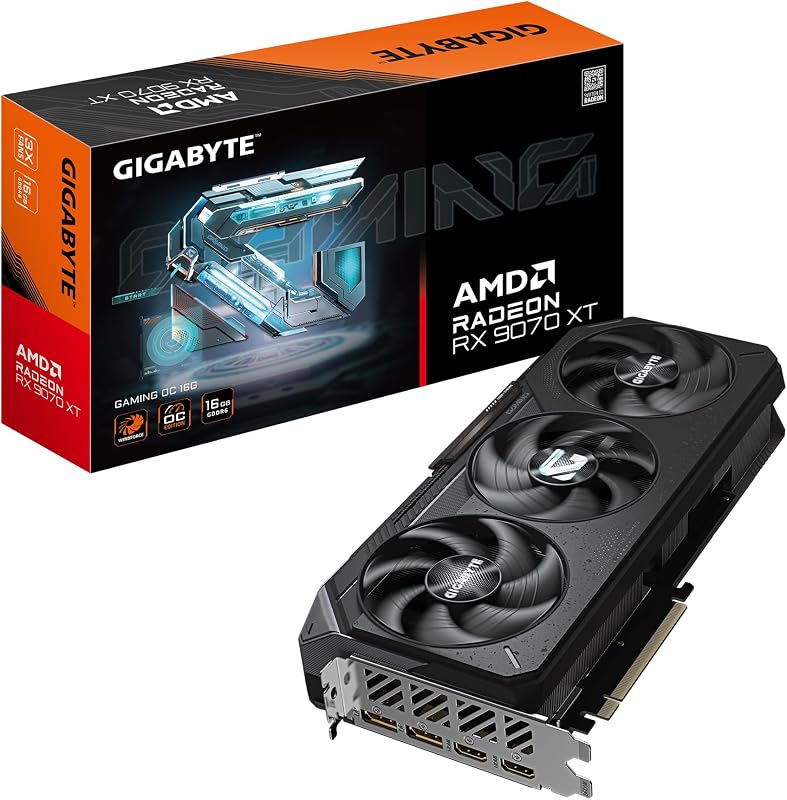
| GIGABYTE Radeon RX 9070 XT | Mainstream High-Speed Desktop Editing & Gaming | 16GB GDDR6 memory, PCIe 5.0 interface, multi-fan consumer cooling |
| PCIe 5.0 ASUS TUF Gaming GeForce RTX 5080 | Fast Consumer Renders & Cutting-Edge PCIe 5.0 Workflows | 16GB GDDR7 memory, PCIe 5.0, 3.6-slot axial cooling, military-grade components |
| ASRock Radeon RX 9070 Challenger | Quiet Operation in Compact Desktop Systems | 16GB GDDR6 memory, 2520MHz boost clock, triple fans with 0dB silent mode |
Choosing between the NVIDIA RTX A6000 and consumer alternatives depends almost entirely on the memory capacity and workflow stability your daily editing demands. If your projects center on standard 4K timelines, gaming, or lighter rendering where a 16-gigabyte memory buffer is adequate, consumer graphics cards provide outstanding raw clock speeds and modern PCIe 5.0 bus support. For example, creative editors looking for modern PCIe 5.0 graphics with GDDR6 memory can select the GIGABYTE Radeon RX 9070 XT, while those who want high-speed GDDR7 memory, military-grade components, and axial-tech fans can opt for the PCIe 5.0 ASUS TUF Gaming GeForce RTX 5080. Similarly, users requiring quiet operation in personal workspaces might prefer the ASRock Radeon RX 9070 Challenger with its 2520MHz boost clock and 0dB silent cooling. However, when working on uncompressed 8K RAW video, massive 3D simulation caches, or complex AI models, consumer cards inevitably hit a hard VRAM ceiling that causes render software to crash, whereas the RTX A6000 provides the 48-gigabyte buffer necessary to maintain uninterrupted workstation productivity.
Bottom Line
Determining whether the investment in an enterprise workstation graphics processor makes sense comes down to your production volume and tolerance for system downtime. For on-the-go video editors who travel light with slim laptops, the nvidia rtx a6000 serves as the ultimate base-station powerhouse. When configuring this GPU inside a dedicated studio workstation, you gain the capability to offload heavy 8K batch exports, 3D ray-traced simulations, and AI-accelerated tasks remotely, ensuring your portable laptop never throttles or runs out of memory on the road.
While the single-fan blower cooling and large desktop footprint require a full-sized chassis, the performance stability provided by 48 gigabytes of GDDR6 memory and Ampere-generation RT and Tensor Cores makes it an indispensable asset for enterprise-grade video editing and creative production. If your creative business depends on reliable, around-the-clock rendering of complex visual media, this visual computing card delivers the massive capacity required to keep your remote production pipeline running without interruption.
FAQ
Is the RTX A6000 worth it for video editing?
Deciding if the is rtx a6000 worth it equation balances in your favor depends on the scale of your video projects. If you frequently handle rtx a6000 for video editing workflows featuring multi-stream 8K RAW files, extensive noise reduction, and complex visual effects compositing, the card eliminates the out-of-memory errors that halt consumer graphics cards. For smaller 1080p or lightweight 4K projects, its massive 48GB capacity exceeds standard timeline requirements.
How does the RTX A6000 48GB memory buffer benefit remote video workflows?
The massive memory buffer allows a stationary desktop workstation to hold large video timelines, uncompressed frame buffers, and complex effect node graphs entirely within high-speed GDDR6 memory. Mobile editors can connect to the base station remotely from low-power travel laptops to initiate heavy batch renders or review full-resolution timelines without overwhelming their laptop hardware or draining battery reserves.
What display resolution does the NVIDIA RTX A6000 support?
According to the official specifications, the graphics card supports a maximum display resolution of 7680 x 4320 through its HDMI video output interface. This capability allows video editors and visual artists to drive ultra-high-resolution 8K production monitors directly from the workstation for precise color grading and timeline inspection.
Can you link two NVIDIA RTX A6000 graphics cards together?
Yes, the card incorporates third-generation NVIDIA NVLink technology. By connecting two cards with an NVLink bridge, users can combine GPU memory into a unified 96-gigabyte pool with increased interconnect bandwidth, making it ideal for massive 3D simulation workloads and extreme visual effects datasets that exceed 48 gigabytes.
How does the single-fan cooling design affect workstation setups?
The GPU uses a single blower-style fan that pulls air across the internal heatsink and vents it directly out through the rear expansion bracket of the computer case. This cooling configuration is specifically engineered for workstation towers and multi-GPU racks because it prevents hot exhaust air from circulating inside the chassis, though it can generate audible fan noise during sustained heavy render sessions.
How this site works
- 194reviews published
- 2,323products with a buyer rating
- 2,260products with listed features
- 84brands covered
Ratings, prices, stock and specifications are read from the Amazon product listing. We do not run lab tests of our own, so a score here is the average rating left by buyers, not a verdict from a test bench. We track one retailer, so prices here are not a comparison.