PreSonus Eris E3.5 Review: The Portable Monitor Pick for On-the-Go Audio Editing
Mobile video editors, traveling podcasters, and remote sound designers often struggle to find an audio monitoring solution that balances precision with portability. Relying entirely on headphones during long editing sessions quickly causes ear fatigue and makes it difficult to judge stereo width or bass balance accurately, while built-in laptop speakers simply lack the fidelity required…
9 min read


Reviewed
PreSonus Eris E3.5
Our score
Well liked
Based on listed specifications — not from testing of our own.
Price today
| Amazon | Not listed | View deal |
|---|
We track one retailer, so this is not a price comparison. Affiliate link; price and stock come from the listing and change without notice.
What you need to know
- For traveling creators evaluating the presonus eris e3.5 specs, this single-cord power design makes setup fast and efficient when establishing a temporary… PreSonus Eris E3.5 Features Explained
- Compact desktop multimedia setups requiring clear, distortion-free audio for video streaming, gaming, and general media playback. Best Use Cases
- From an acoustic standpoint, the 3.5-inch woofer architecture naturally rolls off at 80 Hz, representing an expected physical limitation of compact studio monitors… Before You Buy
- If you have extra room in your travel case and require larger speaker displacement, the Yamaha HS4 Powered Studio Monitor offers a step up with its 4-inch woofer… How It Compares With Similar Picks
- Despite lacking battery power and deep sub-bass below 80 Hz, the versatile connectivity and acoustic controls make building a PreSonus Eris 3.5 portable setup an… Bottom Line
One line lifted from each section below — follow the link to read that section in full.
As Amazon Associates, we earn from qualifying purchases. This means we may receive a small commission at no extra cost to you if you click through and make a purchase.
Mobile video editors, traveling podcasters, and remote sound designers often struggle to find an audio monitoring solution that balances precision with portability. Relying entirely on headphones during long editing sessions quickly causes ear fatigue and makes it difficult to judge stereo width or bass balance accurately, while built-in laptop speakers simply lack the fidelity required for critical listening. The PreSonus Eris E3.5 active media reference monitors solve this problem by delivering genuine studio sound in a compact desktop enclosure. For creative professionals cutting interviews, documentary footage, or soundtrack cues on a dell inspiron 15 touchscreen laptop while working from rented spaces or temporary desks, having reliable desktop reference monitors transforms the accuracy of the final cut.
Our research into the specifications and intended design of these monitors indicates that they serve as a practical audio tool for mobile workstations. While they do require corded electrical power and do not operate on internal batteries, their compact footprint, clean amplification, and acoustic adjustment controls provide dependable reference playback in untreated rooms. In this presonus eris 3.5 studio monitors review, we explore how the hardware performs for travel editing, break down its core specifications, and help you decide whether this stereo pair belongs in your mobile gear kit.
Quick Verdict
The PreSonus Eris E3.5 is an effective, space-saving reference monitor pair tailored for creators who need accurate sound reproduction outside a traditional recording studio. With 50 watts of Class AB power driving a 3.5-inch composite woofer and a 1-inch silk-dome tweeter, it provides clear dialogue and tight transients in a lightweight form factor that slips easily into travel setups.
- Clean 50-watt Class AB onboard amplification ensures distortion-free playback at nearfield listening volumes.
- Integrated high- and low-frequency acoustic tuning controls adapt the frequency response to untreated rooms.
- Versatile input options include balanced rear TRS, RCA, and a front-panel 3.5 mm auxiliary connection.
- Dedicated front-panel headphone amplifier automatically mutes the speakers for private listening in shared spaces.
PreSonus Eris E3.5 Features Explained
Class AB Amplification and Dynamic Headroom
The PreSonus Eris E3.5 utilizes an integrated 50-watt Class AB amplifier located in the left active speaker enclosure. This amplifier powers both monitors, delivering dynamic, clean headroom that avoids the harsh clipping and distortion common in cheap multimedia speakers. When monitoring dialogue peaks, dramatic audio transitions, or subtle background ambience, having stable power ensures that the output reflects your timeline accurately without adding artificial warmth or compression.
Because the amplification hardware is concentrated in a single master speaker, cable management remains straightforward across temporary workspaces. A pair of spring terminals and standard speaker wire connect the active left cabinet to the passive right speaker, keeping weight manageable and minimizing the number of heavy power adapters you need to carry. For traveling creators evaluating the presonus eris e3.5 specs, this single-cord power design makes setup fast and efficient when establishing a temporary workstation.
Driver Configuration and Frequency Range
Evaluating the presonus eris e3.5 sound quality centers on its two-way driver architecture. Low and midrange frequencies are handled by a 3.5-inch woven-composite woofer engineered to provide tight, articulate bass response down to 80 Hz. The rigid woven structure reduces cone resonance, helping editors identify background rumble, plosive thumps, or dialogue frequency masking when polishing location audio captured with cameras like a gopro session refurbished unit.
Complementing the low end is a 1-inch silk-dome tweeter that extends smoothly up to 20 kHz. The tweeter delivers an even, wide dispersion pattern that expands the stereo sweet spot, allowing you to move naturally along your desk without losing treble accuracy. This smooth high-frequency response prevents auditory fatigue during marathon mixing sessions, ensuring you can judge vocal sibilance and Foley textures with consistent clarity.
Onboard Acoustic Tuning Controls
One of the most valuable features for mobile creators is the rear-panel acoustic tuning section. In untreated temporary workspaces, hotel rooms, or tight corners, boundary reflections often inflate bass frequencies or cause treble harshness. The PreSonus Eris E3.5 includes dedicated low- and high-frequency acoustic tuning knobs that allow you to boost or cut frequencies to counteract the acoustic anomalies of your room without relying on software equalizers.
This physical presonus eris e3.5 acoustic tuning capability is particularly beneficial for traveling professionals who encounter different room shapes and surface materials each week. If your desk placement forces the rear-ported monitors against a reflective wall, dialing back the low-frequency control immediately cleans up the lower midrange. Having tactile analog adjustments ensures consistent reference sound regardless of the operating system or playback application you use.
Flexible Desktop Connectivity
Mobile workflows require rapid patching to multiple audio sources, and the presonus eris e3.5 inputs accommodate diverse hardware setups effortlessly. On the rear panel, balanced 1/4-inch TRS jacks provide professional noise-rejecting connections for external audio interfaces and mixers, while unbalanced RCA inputs handle standard desktop audio sources and media players. This dual-input arrangement lets you keep an editing interface connected while maintaining an open path for secondary inputs.
For fast daily access, the front panel features an 1/8-inch stereo auxiliary input and an integrated headphone output. When working late in noise-sensitive hotel rooms or shared office spaces, plugging headphones directly into the front jack automatically mutes the main speakers. You can also quickly patch a tablet or smartphone into the front aux input without reaching around behind your equipment, keeping your desktop workflow uncluttered and fast.
Specs
| Speaker Type | Active Media Reference Monitors |
|---|---|
| Amplification | 50 Watts Class AB |
| Woofer Size | 3.5 inches woven composite |
| Tweeter Size | 1 inch silk dome |
| Frequency Response | 80 Hz to 20 kHz |
| Audio Output Mode | Stereo |
| Enclosure Material | Composite, Silk, Wood |
| Inputs | Balanced 1/4-inch TRS, Unbalanced RCA, 1/8-inch Front Aux |
| Outputs | 1/8-inch Front Headphone Out |
| Listening Range | Maximum 1 meter nearfield |
| Water Resistance | Not Water Resistant |
Full spec sheet from the listing (40 entries)
| 0 | Audio Output Mode, Stereo |
|---|---|
| 1 | Mounting Type, Desktop, Bookshelf |
| 2 | Enclosure Material, Composite, Silk, Wood |
| 3 | Speaker Type, Active Media Reference Monitors |
| 5 | Antenna Location, Multimedia, Gaming, Studio-Quality Music Production |
| 6 | Subwoofer Diameter, 3.5 inches |
| 7 | Color, Black |
| 8 | Is Waterproof, False |
| 9 | Warranty Type, Limited |
| 10 | Maximum Range, 1 meters |
| 11 | Control Method, Touch |
| 12 | Speaker Size, 3.5 inches |
| 13 | Woofer Diameter, 3.5 inches |
| 14 | Tweeter Diameter, 1 inches |
| 15 | Water Resistance Level, Not Water Resistant |
| 16 | Bluetooth Range, 10 meters |
| 17 | Specific Uses For Product, Multimedia, Gaming, Studio-Quality Music Production |
| 18 | Controller Type, Corded electric |
| 19 | Unit Count, 2 Count |
| 20 | Item Dimensions D x W x H, 5.5"D x 6"W x 8.3"H |
| 21 | Item Weight, 6.4 pounds |
| 22 | Compatible Devices, All types of audio equptment |
| 23 | Audio Driver Type, Dynamic Driver |
| 24 | Brand, PreSonus |
| 25 | Model Number, Eris 3.5 |
| 26 | Model Name, Eris 3.5 |
| 27 | Built-In Media, 1 pair of Eris 3.5 monitors |
| 28 | Warranty Description, 2 year manufacturer |
| 29 | Number of Items, 2 |
| 30 | Customer Package Type, Colored Box |
| 31 | UPC, 673454011795 |
| 32 | Manufacturer, PreSonus |
| 33 | Age Range Description, Adult |
| 34 | Best Sellers Rank, #192 in Musical Instruments (See Top 100 in Musical Instruments) #1 in Studio Audio Monitors |
| 35 | ASIN, B0C88ZB3D9 |
| 36 | Speaker Maximum Output Power, 50 watts |
| 37 | Input Voltage, 120 volts |
| 38 | Frequency Response, 20 KHz |
| 39 | Number of Audio Channels, 2 |
| 40 | Connectivity Technology, 1/4" TRS, Auxiliary, RCA |
Quoted from the product listing, not measured by us.
PreSonus Eris E3.5 Pros and Cons
Pros
- Clean 50-watt Class AB onboard amplification
- Dedicated high and low acoustic tuning controls
- Balanced TRS and unbalanced RCA rear inputs
- Smooth 1-inch silk-dome tweeters
- Convenient front-panel aux and headphone ports
Cons
- Requires corded electric wall power with no battery option
- Not water resistant for exposed outdoor use
- Bass frequency response cuts off below 80 Hz
- Nearfield listening range limited to 1 meter
Check PreSonus Eris E3.5 on Amazon
Best Use Cases
- Mobile video editing where cutting dialogue and balancing tracks requires accurate stereo nearfield monitoring.
- Podcast and voiceover production demanding neutral vocal clarity to detect background noises and room reverberation.
- Location music arrangement and sound design for traveling composers building project sketches on portable workstations.
- Compact desktop multimedia setups requiring clear, distortion-free audio for video streaming, gaming, and general media playback.
Before You Buy
Before adding the PreSonus Eris E3.5 to your travel kit, it is important to consider its operational requirements and physical constraints. These speakers are corded electric devices that rely entirely on standard wall power, as they contain no internal battery. Consequently, editors working off the grid must supply an external power bank or AC generator. Furthermore, the listing explicitly notes that these monitors are not water resistant, so they must remain in dry indoor environments and cannot be exposed to rain, mist, or high moisture when traveling between shooting locations. Traveling editors should also note that the product listing does not specify whether a dedicated protective carrying bag is included, meaning you will need to supply your own padded case to protect the composite and wood cabinets during transit.
From an acoustic standpoint, the 3.5-inch woofer architecture naturally rolls off at 80 Hz, representing an expected physical limitation of compact studio monitors for travel. If your production workflow demands monitoring deep sub-bass frequencies for club music or cinematic theatrical mixes, pairing the system with a dedicated subwoofer or checking the lowest octaves on calibrated headphones is necessary. Additionally, the manufacturer specifies a maximum nearfield listening range of 1 meter, which means these monitors perform best when placed close to your listening position on a desktop rather than across a large room.
How It Compares With Similar Picks
| Product | Best For | Key Difference |
|---|---|---|
| PreSonus Eris E3.5 | Mobile editing and precision tuning | Features rear acoustic tuning controls, 50W Class AB power, and balanced TRS inputs |
| Yamaha HS4 Powered Studio Monitor | Larger desktop editing setups | Uses a larger 4-inch woofer format for slightly expanded desktop monitoring |
| Mackie CR3.5 Studio Monitors | Simplified desktop sound adjustments | Features a front-panel tone knob instead of multi-band rear acoustic tuning |
| FOR HOME STUDIOS | Wireless streaming and casual production | Includes Bluetooth 5.3 connectivity and a white finish cabinet design |
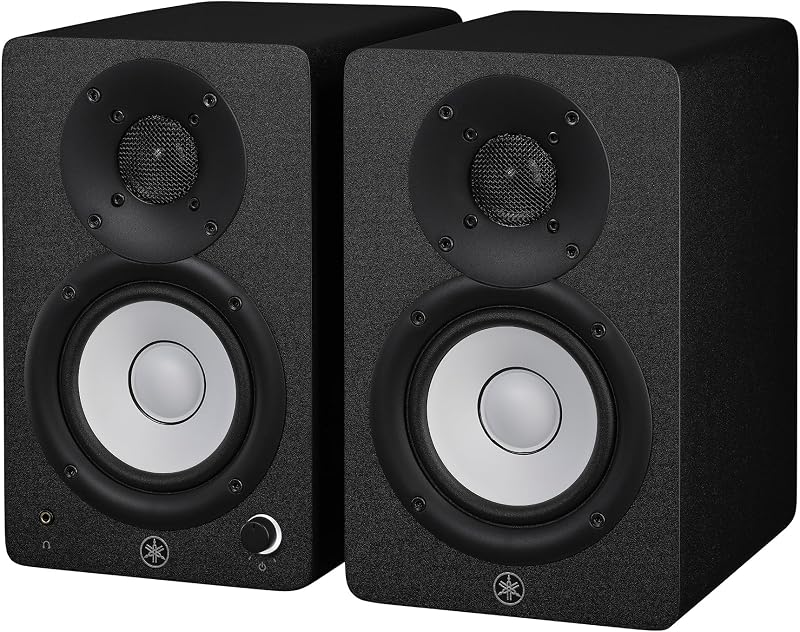
Choosing among these compact monitors comes down to whether your workflow prioritizes acoustic accuracy or multimedia convenience. If you have extra room in your travel case and require larger speaker displacement, the Yamaha HS4 Powered Studio Monitor offers a step up with its 4-inch woofer format. For creators who prefer quick tonal changes over granular high- and low-frequency shelving knobs, the Mackie CR3.5 Studio Monitors provide a streamlined front tone knob control. If wireless streaming from tablets or phones is a must-have feature for your mobile kit, the FOR HOME STUDIOS monitors provide Bluetooth 5.3 connectivity, whereas the wired architecture of the PreSonus Eris E3.5 focuses strictly on low-latency, uncompromised reference audio.
Bottom Line
Deciding whether the PreSonus Eris E3.5 is worth it comes down to the acoustic demands of your mobile workflow. For creators who cannot afford to rely entirely on headphones while on location, using the PreSonus Eris E3.5 for video editing delivers the transparent midrange and honest imaging necessary to catch dialogue issues and balance complex timelines. Its compact size ensures it packs neatly into standard luggage, making it a dependable audio companion for temporary production workspaces.
Whether hooked up to an efficient snapdragon x2 elite extreme laptop in a hotel suite or integrated into a permanent desktop arrangement, this monitor pair delivers reliable studio performance. Despite lacking battery power and deep sub-bass below 80 Hz, the versatile connectivity and acoustic controls make building a PreSonus Eris 3.5 portable setup an exceptional choice for traveling audio and video editors.
FAQ
Is the PreSonus Eris E3.5 suitable for travel and remote editing?
Yes, its compact 3.5-inch woofer size and lightweight enclosure make it easy to pack in travel bags. However, because the unit relies on corded electric power and is not water resistant, you must use it in dry indoor spaces with access to standard electrical wall outlets.
Can I connect the PreSonus Eris E3.5 directly to a laptop without an audio interface?
Yes, you can connect your laptop directly to the monitors using either the rear RCA inputs or the front-panel 1/8-inch auxiliary input with a standard 3.5 mm audio cable, eliminating the need for external converter boxes.
How do the acoustic tuning controls help in untreated rooms?
The rear-panel high- and low-frequency tuning knobs let you boost or cut frequency bands to compensate for room boundaries. When monitors sit near walls or reflective surfaces, dialing back the low frequencies reduces artificial bass buildup and restores a flat acoustic response.
Does the PreSonus Eris E3.5 contain an internal rechargeable battery?
No, the product specifications state that it operates via corded electric power. There is no internal rechargeable battery, so a wall outlet or AC power station is required for operation.
What is the optimal listening range for the PreSonus Eris E3.5?
The manufacturer lists a maximum listening range of 1 meter. Positioning the monitors within arm’s reach forms an equilateral triangle with your head, ensuring optimal stereo imaging and reducing the impact of room reflections.
How this site works
- 2,045reviews published
- 2,323products with a score
- 2,260products with listed features
- 84brands covered
Prices, stock and specifications are read from the Amazon product listing. We do not run lab tests of our own; scores are out of 10, based on listed specifications and buyer feedback, not a verdict from a test bench. We track one retailer, so prices here are not a comparison.


